



 (214) 766-3669

A ceiling stain tells you water got in. It rarely tells you where. Water can travel a long way inside before it shows, so the stain over the hallway may start at a boot or a cracked shingle several feet away. Our job is to follow it back to the roof and fix the part that failed.

Use the form to note where the stain or drip appears and when it started, or phone (214) 766-3669 from 7 am to 6 pm, seven days.
A leak call starts with the same free assessment as every SunTex job, aimed at one question: what failed, and how much of the roof around it is affected.

We work from the stain back to the roof and photograph the failed part, whether that is a shingle, a boot, a strip of flashing or a clogged valley. You see the cause before you see a price.

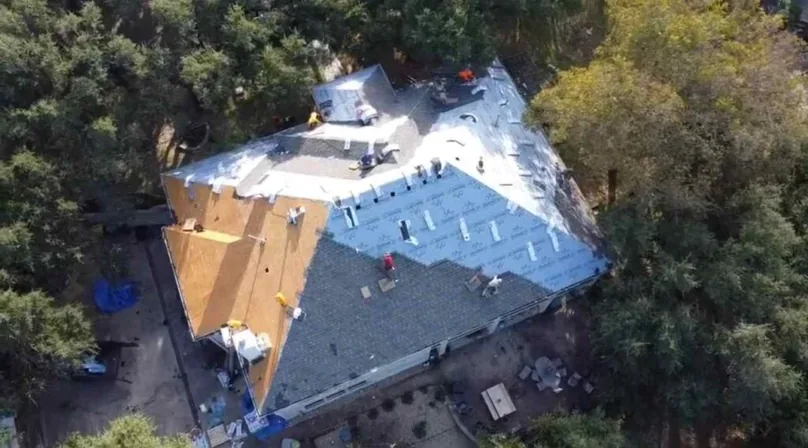
On a Round Rock roof the leak is often only the part of the hail damage that finally gave way. We look at the rest of that slope as well, because the shingles next to the leak took the same storm.

The repair estimate comes in writing, sized to what the photos show. It is the same leak work we do through the roof repair service we run for homes from Frisco to Central Texas, with the scope set by your roof rather than a standard package.
Put a bucket under the drip and move furniture and anything else that can be damaged out of the way. The Texas Department of Insurance’s disaster-claims FAQ calls temporary fixes generally OK.
Photograph the stain, the drip and anything it damaged before any work starts, and write down when you first noticed it and any storm you remember before that.
Phone or use the form; we trace the leak at the house, photograph the cause and put the repair price in writing.
Repairs are a steady part of the roofing work we do for Round Rock owners, landlords and apartment buildings, because hail damage in this city tends to come in big, infrequent batches and the leaks follow at their own pace. Round Rock’s largest hail days are few, but each one can damage roofs across the city in a single afternoon, and not every bruise leaks in the same year.
When the damage has spread past one slope, or the shingles are too brittle to work around, the honest answer may be a full reroof built to Round Rock’s drip edge rule, and we will say so with photos. When the leak traces back to a specific hail day and a claim is in play, the dated storm record and the claim steps live with Round Rock hail damage repair, documented storm by storm.
 Feedback
From residential and commercial roof replacement to urgent emergency roof repairs, our 5-star service speaks for itself.

We used them for Christmas lights and could not have been happier. The entire process was so simple and our lights looked amazing. Very high quality and didn’t have one light bulb out the entire season. Highly recommend using them for your holiday lighting!

Bailey Pullin


Hands down recommend Beth and Alex with Christmas Lights and roofing consultations. Their communication is on point! Excellent service through your whole experience. We have been using them for two years now and will continue! Thanks yall!

Carin Gonzales
Highly recommend. Merry and Bright by Suntex Roofing made our home merry and bright this holiday season and are now my permanent go-to for my holiday lighting needs.

Chad Mandrell
The other day I had James Rose from SunTex do a courtesy inspection of our roof they replaced a little over a year ago. Mr. Rose was professional and knowledgeable when discussing how the drone inspection reveals no flaws or damage to the roof. I would definitely recommend SunTex to anyone look to have roof work done.

kalonji singleton
Alex Keller with SunTex Roofing exceeded! SunTex gave us a great experience from start to finish. The entire crew protected our new windows, plants, AC units, garden structures and even pool. I HIGHLY recommend this Texas local roofing company.

Sara Odom

Teri Redwine
SunTex provides unmatched customer support and response times. We moved into a new house with the previous owners creating a massive hole upon moving out. SunTex came out immediately and provided a temporary patch to mitigate damage from an incoming storm. Then came back for the official repair a few days later.

Alex Chase
Leanne and her team do GREAT work! Fast and clean as they do your roof replacement process. Leanne and her team are very professional. They get the job done. We are very pleased with our new roof, cutters and the restoration of our fence after the Salado Tornado this past April.

Gary Schmiedekamp
We used them for Christmas lights and could not have been happier. The entire process was so simple and our lights looked amazing. Very high quality and didn’t have one light bulb out the entire season. Highly recommend using them for your holiday lighting!

Bailey Pullin
100% cannot recommend enough!!! So thankful for SunTex. They helped us every step the way. They educated me and worked with me. I would highly recommend them to anyone needing roof replacement or repairs. Their staff is amazing! Cannot thank them enough.

Juan Cruz
A small stain that grows after each rain usually means water is still getting past the roof. Book a free assessment and we will show you where.

Shingle makers say plainly that hail damage does not always show at once. TAMKO’s technical notice on replacing asphalt shingles advises against replacing only the visibly damaged shingles on a roof that has taken hail, because over time the whole slope may reveal damage and wear that was not apparent at first (TAMKO Technical Notice, September 17, 2024).
That fits what Round Rock roofs went through. The city’s big hail came in a cluster of storm days between 2021 and 2023, with stones on the largest of them measured at three inches and more. A roof that came through those afternoons looking fine from the street can carry cracks that open further over time. The leak that appears in 2026 may have started on a day in 2023.
So when we trace a leak on a Round Rock roof, we do not stop at the one shingle that let water through. We check the slope around it, photograph what we find, and tell you whether the leak is a one-spot repair or the first sign of a slope that needs more.
Timing matters for coverage, too. Under most home policies, TDI explains, water that seeps in slowly through a gradual leak is not covered, and neither is the mold it brings (TDI, Homeowners insurance and disaster claims FAQ). A leak caused by a storm and a leak that crept in over years can look the same on a ceiling, and an adjuster will want to know which one you have.
The same FAQ sets the order: patch temporarily if you must, leave the permanent fix until you have spoken with your insurance company, and photograph the damage before anyone touches it. Our photos of the failed part, taken at the assessment, add the roof-level view to the pictures you took inside.
We do not decide or negotiate coverage. We document what we find and write the repair scope, and the claim stays between you and your insurer.
Cracked shingles are the obvious entry point, but they are not the only one. Hail and wind strike everything on the roof, and the leaks we trace tend to start at the parts that seal the gaps.
Pipe boots are one. They seal the plumbing vents that come through the roof, they are usually rubber or neoprene, and Texas sun cracks them. A boot that was already aging when the hail came through can split around the pipe and send water into the attic near a bathroom ceiling.
Flashing is another. The metal at chimneys, skylights, walls and valleys can shift, rust or crack, and once it does, water runs behind the shingles instead of over them. Valleys and gutters packed with storm debris and loose granules add to it, pushing water back up under the shingles at the low points of the roof.
Three choices shape a repair on a roof that has been through big hail. We go over each one with photos before any work starts.
If the damage sits around one boot or one valley and the rest of the slope is sound, a targeted repair is the right spend. If the photos show cracked shingles spread across the slope, TAMKO’s advice is to consider replacing a broader section than the visible damage, and we price both so you can compare.
Not every shingle is cut to the same dimensions. TAMKO notes that shingles made to metric measurements and to standard English dimensions are not compatible and cannot share a roof, for looks or for performance. We check the size of your existing shingles before ordering replacements.
Shingles from different manufacturers can differ in performance and look, and even one maker’s shingles can vary in color between plants, production lines and run dates. Where your original line is still made, we source it as closely as we can. Where it is not, we show you the nearest match before we install it.
Many Round Rock roofs are original to houses built in the 1990s and 2000s. TAMKO warns that aging shingles can become brittle and more prone to cracking, which makes it hard to remove one without damaging its neighbors. On an older roof we work slowly around the repair, and if the shingles around it crack as we lift them, we stop and show you before going further.
Every pipe, vent and rooftop mount is a hole in the roof with a seal around it. Aging boots crack in Texas sun, hail can dent vent caps, and equipment mounted on the roof, like satellite dishes or solar racking, can break seals where it is fastened. We check each penetration on the slope, not only the one over the stain.
Chimneys with rusted step flashing, skylights with cracked seals and valleys where the flashing was layered badly are all common leak points. Leaks near a chimney are hard to place from inside the house, so we photograph the flashing from the roof and show you where the water is actually getting behind it.
A repair is right when the damage is limited: one boot, one strip of flashing, a few cracked shingles in one area. It stops making sense when cracked shingles run across most slopes, when new leaks keep appearing in different places, or when the shingles are too brittle to work around. If your roof is sound and you want it watched from here on, a Roof Care Program membership with twice-yearly flashing, pipe jack and vent checks gives members a written roof health report with photos after each inspection.
Once you approve the repair, the work runs in this order.
If water is still getting in, the first job is limiting the damage inside the house. A temporary repair can come first while the permanent one is planned, and TDI’s guidance is to photograph the damage before either.
We open the area around the leak, check the underlayment and deck beneath it, and photograph what we find. If the damage reaches further than the estimate assumed, you see the photos before we change the scope.
The failed shingles, boot or flashing are replaced with matched material and sealed, and your project manager confirms the finished repair with you, including photos of the work.
If a stain has appeared since the last hailstorm, or a drip comes back with every heavy rain, start with a free assessment. We will find the source, photograph it, and give you a straight answer on whether it is a repair or something bigger.
The phone, (214) 766-3669, is answered 7 am to 6 pm every day; the form works too, and we call back. Our one office is on Westridge Blvd in Frisco, and Alex Keller looks after Central Texas and Austin sales.
Reliability. Relationships. Results.
Ring (214) 766-3669 to set a time for us to trace your leak.
Round Rock leak repair questions
It can. TAMKO notes that on a hail-struck roof, damage and wear that was not apparent at first may show over time across the whole slope. A shingle cracked in 2023 can hold through dry spells and leak once the crack opens further. If your roof went through one of Round Rock’s big hail days and now leaks, tell us the storm date when you book.
Do both, in order. TDI treats temporary fixes as generally OK and asks owners to wait on permanent repairs until they have spoken with their insurer, photographing the damage first. Keep receipts for the temporary fix.
Often not. TDI says most home policies exclude water damage from gradual leaks and seepage, mold included. A leak caused by a covered storm is a different question, which is why the cause and its date matter. Check your own policy, since wording varies by company.
On a roof that has taken hail, TAMKO advises against replacing only the visibly damaged shingles, because more of the slope may turn out to be damaged than first appears. We check the slope around the leak and price a spot repair and a broader one, so you can see the difference.
Often closely, sometimes not exactly. Matching means the same size, the same manufacturer and, ideally, a nearby production run, since color can vary between plants and run dates. If your original line is no longer made, we show you the nearest match before installing it.
Blog

© Copyrighted 2026 SunTex Roofing and Reconstruction. All Rights Reserved. Powered by Fast Hippo Media