



 (214) 766-3669

Georgetown's housing is young. Nearly 45% of its homes were built in 2010 or later, and a newer subdivision often comes with an architectural committee that has a say over the roof. We are a woman-owned roofing company, and a Georgetown call can be about a few wind-lifted shingles, a hail claim on a whole roof, or a board choosing one shingle for a community. We take on all three and say plainly which one your roof needs.

Send the form and we will call back to pick a time, or call (214) 766-3669. Our phones are answered from 7 am to 6 pm, every day of the week, weekends included.

 Woman-owned, with Central Texas names you can call
SunTex is 100% woman-owned and operated, and Leanne Tolbert owns it. For Georgetown and the rest of Williamson County, the people to know are Alex Keller, who manages our Central Texas and Austin sales, and Travis and Alison Gardenhire, our Central Texas project managers. Beth Keller runs operations and Suade Sherman runs the office, which is in Frisco at 12800 Westridge Blvd, Suite 162, where scheduling and paperwork are handled.
We call our service concierge. On a Georgetown roof, whether it needs a small repair or a full replacement, that word has to mean three specific things, or it means nothing.

If your subdivision has an HOA with architectural rules, we match the approved shingle, color and profile in the estimate and help you put together what the committee reviews. When the board wants to hear from the roofer directly, we will attend the HOA meeting with you and answer its questions.

One dedicated project manager schedules the work, takes your calls and walks the finished roof with you. That holds for a repair on one slope as much as for a reroof.

After wind or hail, we photograph the damage and support your insurance restoration claim with that record. What your policy pays is decided between you and your insurer, and we keep our role to the evidence and the roof.
Call (214) 766-3669 or use the form. Give us the storm date if you know it, whether it was the May 2026 wind or a spring hail day, mention any stain or drip you have seen inside, and tell us if your home sits inside an HOA.
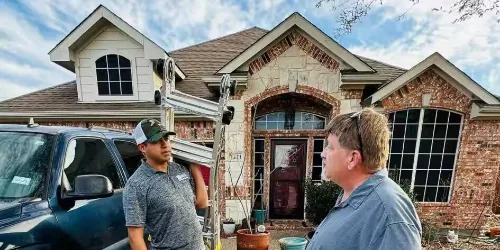
We come to your Georgetown home for a complimentary assessment, photograph each problem we find and explain plainly whether the roof needs a repair, a full replacement or nothing at all yet.
Once you sign off on the estimate and the material, and your association signs off where it has to, your project manager books the crew and keeps you posted through the final walkthrough.
The Census Bureau's 2020 to 2024 American Community Survey counts 37,206 housing units in Georgetown. Of those, 12,145 were built in the 2010s and 4,415 in 2020 or later, so roughly 16,560 homes date from 2010 onward (U.S. Census Bureau, ACS table B25034). The median Georgetown home was built in 2008.
The city is not only new, though. About 9,000 units went up in the 2000s, about 5,300 in the 1990s, and 578 before 1940. One storm can cross a three-year-old roof, a twenty-year-old roof and a far older one in the same afternoon, and each calls for a different answer from a roofer: a repair on one house, a replacement on the next. The survey puts the median value of an owner-occupied home at $429,100, and owners live in 24,586 of the 35,400 occupied homes.
Storms here ignore the city limit. On April 18, 2026, NOAA logged pea to quarter size hail across a swath between Georgetown and Round Rock, near Westinghouse Road, FM 1460 and Highway 130, and we take on roof work for Round Rock neighborhoods on that storm track as well. On April 28, 2023, quarter size hail fell in Georgetown on the same day half dollar hail was reported in Liberty Hill, whose young roofs mostly sit on homes built since 2010. The September 24, 2023 storm complex that put 2.5 inch hail on western Georgetown also dropped tea cup size hail on Pflugerville roofs still carrying that storm's dents, and to the north in Bell County we assess and repair Belton homes under a 4.25 inch hail record.
We roof in Georgetown as part of a service area that takes in the Williamson County, Austin-area and Central Texas towns we cover. Call (214) 766-3669 to get on the assessment calendar.
100%
Woman-owned and operated
7 Days
Open 7 am to 6 pm
Free
Roof assessment and estimate
Since 2022
Serving Texas homeowners
Feedback
From residential and commercial roof replacement to urgent emergency roof repairs, our 5-star service speaks for itself.

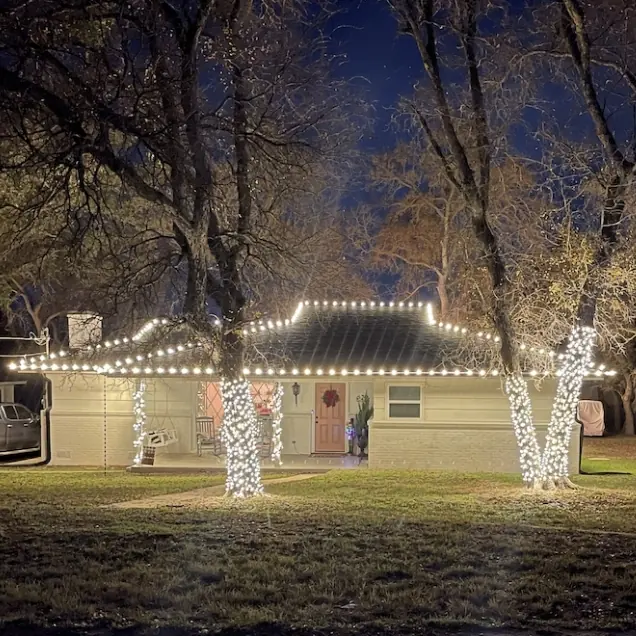
We used them for Christmas lights and could not have been happier. The entire process was so simple and our lights looked amazing. Very high quality and didn’t have one light bulb out the entire season. Highly recommend using them for your holiday lighting!

Bailey Pullin


Hands down recommend Beth and Alex with Christmas Lights and roofing consultations. Their communication is on point! Excellent service through your whole experience. We have been using them for two years now and will continue! Thanks yall!

Carin Gonzales
Highly recommend. Merry and Bright by Suntex Roofing made our home merry and bright this holiday season and are now my permanent go-to for my holiday lighting needs.

Chad Mandrell
The other day I had James Rose from SunTex do a courtesy inspection of our roof they replaced a little over a year ago. Mr. Rose was professional and knowledgeable when discussing how the drone inspection reveals no flaws or damage to the roof. I would definitely recommend SunTex to anyone look to have roof work done.

kalonji singleton
Alex Keller with SunTex Roofing exceeded! SunTex gave us a great experience from start to finish. The entire crew protected our new windows, plants, AC units, garden structures and even pool. I HIGHLY recommend this Texas local roofing company.

Sara Odom

Teri Redwine
SunTex provides unmatched customer support and response times. We moved into a new house with the previous owners creating a massive hole upon moving out. SunTex came out immediately and provided a temporary patch to mitigate damage from an incoming storm. Then came back for the official repair a few days later.

Alex Chase
Leanne and her team do GREAT work! Fast and clean as they do your roof replacement process. Leanne and her team are very professional. They get the job done. We are very pleased with our new roof, cutters and the restoration of our fence after the Salado Tornado this past April.

Gary Schmiedekamp
We used them for Christmas lights and could not have been happier. The entire process was so simple and our lights looked amazing. Very high quality and didn’t have one light bulb out the entire season. Highly recommend using them for your holiday lighting!

Bailey Pullin
100% cannot recommend enough!!! So thankful for SunTex. They helped us every step the way. They educated me and worked with me. I would highly recommend them to anyone needing roof replacement or repairs. Their staff is amazing! Cannot thank them enough.

Juan Cruz
A gust strong enough to break a shingle's seal can leave the shingle in place, so the damage is easy to miss from the yard. A free assessment with photos tells you whether a repair will hold or the roof needs more.

We started in 2022, and SunTex is 100% woman-owned and operated. Our only office is at 12800 Westridge Blvd, Suite 162, in Frisco, the same address as our Google Business Profile. We do not claim a Georgetown office, because we do not have one, and a Georgetown homeowner should know where a roofer is based before signing anything.
Our Georgetown work runs through people with names. Alex Keller manages Central Texas and Austin sales, Travis and Alison Gardenhire manage Central Texas projects, and all of them are listed on our About page next to the rest of the team.
Before you hire any roofing company after a storm, ask three questions: where is it based, who manages the job day to day, and who answers the phone if something needs a second look later. We answer all three on the first call.
NOAA's Storm Events Database files 37 hail reports under Georgetown between 2010 and the end of June 2026. Twenty-eight of them were an inch or larger, spread over 11 storm days (NOAA NCEI Storm Events Database). A few that matter for roofs:
Wind and tornadoes fill in the rest of the file. On July 15, 2017, a National Weather Service survey found that a weak EF0 tornado damaged six to eight homes off Teravista Club Drive and Caldwell Palm Circle, peeling small sections of roof off a couple of them, a report NOAA files under Georgetown. A microburst on July 28, 2021, with gusts estimated at 70 mph, overturned a camper. On March 18, 2018, gusts estimated at 70 mph damaged several homes in Rancho Sienna on the west side of Georgetown and tore a chimney off one roof, a report NOAA files under Leander.
The place names are loose. Two of the April 22, 2025 entries filed under Georgetown describe hail on the north side of Round Rock, so read the count as reports filed under the Georgetown name, not a map of every roof that was hit.
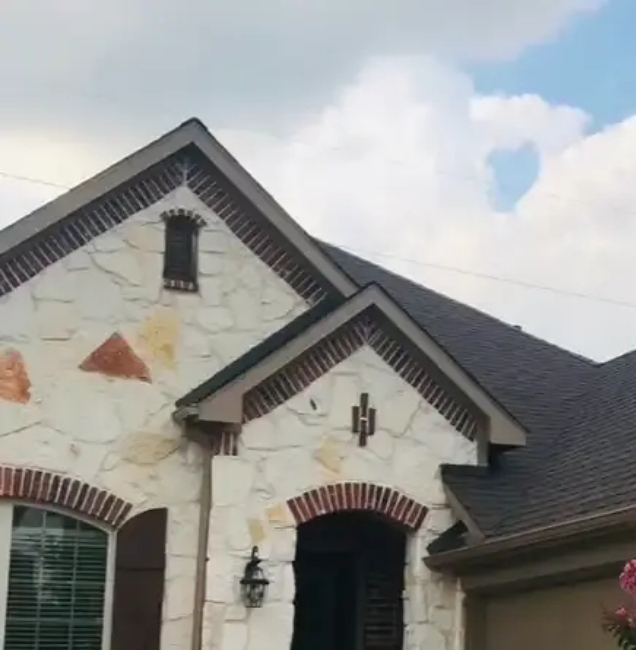
Three questions sit behind most roofing decisions in Georgetown. The first is approval: will the association accept this shingle and this color, and who handles the request? The second is wind, because the people asking have watched branches come down in their own yards. The third is the claim: will the paperwork hold up if the insurer pushes back on what the storm did?
We price a repair or a replacement only after all three have answers. On approval, we match the approved specs and offer to attend the board meeting. On wind, the published rating of each shingle on your shortlist belongs in the discussion, and on a repair we check whether the shingles around the damage still hold their seal. On the claim, dated photos of your own roof go into the file, so the conversation with your insurer is about evidence instead of opinions.
Most asphalt shingles hold on in wind because of a sealant strip that bonds each course to the one below it. The industry test for wind resistance, ASTM D7158, measures exactly that: it compares the uplift force wind exerts on a shingle at a given speed with the uplift resistance the shingle shows once it is sealed under defined conditions (ASTM D7158/D7158M). A shingle's wind rating assumes the seal is intact.
That is why a strong gust does damage you cannot see from the driveway. It lifts the tab, breaks the bond and lets the shingle settle back down, still nailed but no longer sealed. Some shingles crease at the nail line when they flex. The next storm finds that loose course and peels it back, and the leak shows up months after the wind that caused it.
Georgetown storms rarely bring wind alone. On April 2, 2017, NOAA logged quarter size hail and gusts estimated at 60 mph in Georgetown on the same day. A roof that has been through days like those can carry hail bruising and broken seals at the same time, and an honest assessment has to check for both.
When the loosened courses are confined to one slope, a repair to that area can be the whole job. When broken seals turn up across the roof, patching one spot leaves the rest waiting for the next storm. The signs worth watching for are lifted or creased shingle edges on the side that faces the storm, granules piling up at the downspouts, and shingles lying in the yard after a windy night.
Every Georgetown estimate turns on a few choices, whether the material covers one slope or the whole house.
If your neighborhood's architectural guidelines name an approved shingle line, color range or profile, that list comes first and the rest of the decisions happen inside it. We match it in the estimate and prepare what the committee needs to review. When a board is planning roofs for a whole community, we bring the same spec matching to roofing for HOA boards and their common buildings.
Shingle manufacturers publish a wind classification for each product, tied to the uplift testing described above. In a city where a 74 mph gust has been measured, ask us to show you the classification of every shingle on your shortlist, and weigh it alongside the color you want.
Asphalt shingles are the standard and usually the lowest cost. Designer shingles add depth on larger homes, tile fits Spanish and Mediterranean elevations, and standing seam metal works on modern designs or as an accent over a porch. We install all four, and your HOA may narrow the field before we do. On a repair the goal changes: the new shingles should come as close as possible to the ones already on the roof.
Repair is the right answer when damage is confined to one spot: a cracked pipe boot, a few shingles torn off one slope, one length of flashing that pulled loose. Replacement is the better answer when any of these are true:
In a city with homes from every decade, that line falls in different places. We tell you which side your roof is on, and when the answer is a repair, we say so.
From the ground or a ladder you are comfortable on, you can check a few things yourself:
Stay off the roof itself. Footing on a damaged slope is poor, and a misplaced step can crack a shingle the hail only bruised. If the gutters took the same hits, we repair and install gutters too, so they can go into the same estimate.
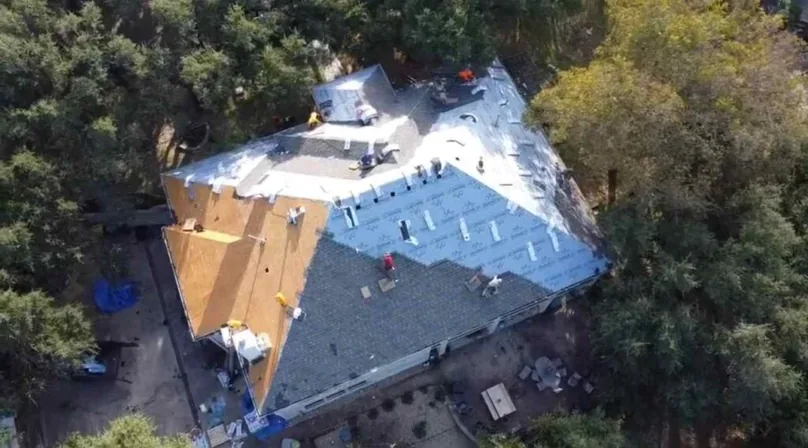
When the answer is replacement, the old roofing comes off down to the wood deck. That is the only point at which anyone can see whether sheathing is soft, rotted or delaminated, so no estimate written from the ground can promise what the deck looks like underneath. Once the deck is sound, new underlayment goes down, then flashing at the walls, valleys and penetrations, then the roofing material and the ridge and vent components. Your project manager keeps you posted as each stage moves.
April dominates. Of the 28 reports of inch-or-larger hail filed under Georgetown since 2010, 16 came in April, most of them on April 22, 2025 and April 28, 2023. The rest are spread across March, May, June, September and October, including two October 2019 reports, one of them golf ball size. If a fall storm leaves granules in your gutters, have the roof checked then. Do not wait for spring, because a claim is easier to support when the storm date and the photos sit close together.
Two parts of Chapter 707 of the Texas Insurance Code affect almost every storm claim on a roof. Section 707.002 says the insured must pay the deductible on a property claim. Section 707.004 lets an insurer on a replacement cost policy refuse to pay withheld recoverable depreciation until it receives reasonable proof that the deductible was paid, such as a canceled check or a credit card statement (Texas Insurance Code Chapter 707).
In practice, a roofer who offers to cover your deductible without your insurer's consent is offering something the law forbids, and the arrangement can hold up the rest of your claim money. We will not make that offer. Pay the deductible the ordinary way, keep the receipt, and the depreciation conversation with your insurer stays simple.
The Census count for Georgetown includes 2,675 units in buildings of 50 or more, 1,054 in buildings of 20 to 49 and 1,151 in buildings of 10 to 19.
We roof residential, commercial and multi-family properties. A larger building gets the same treatment as a house: photographs of the existing condition, a written estimate for the repair or the replacement, and one project manager who coordinates with the owner or the board. Where an association governs several buildings, we match the approved specification across every one so the community looks consistent.
After a repair or a replacement, you can join the SunTex Roof Care Program. Members get two inspections a year, a written roof health report with photos, minor sealant touch-ups, priority scheduling after severe weather and preferred pricing on repairs. In a city where wind keeps testing shingle seals, a twice-yearly check is the simplest way to catch a loose course before the next storm does.
When you call (214) 766-3669, we ask what you have noticed, which storm you think did it, whether you have spoken to your insurer and whether your HOA reviews roofing changes. Those answers shape the visit before anyone climbs a ladder.
We assess the roof at your Georgetown address and photograph each problem. You get a written estimate, a recommendation on repair versus replacement, and the shingle options that fit your association's list. If you file a claim, the photos go with it.
Your project manager confirms the crew date, checks in while the work is under way and walks the finished roof with you. Ask about the Roof Care Program before we wrap up if you want the roof inspected from then on.
Before the work, a storm-tested Georgetown roof tends to give itself away in small ways. A few shingle edges stay lifted on the windward side. Granules gather in the gutters after every rain. A vent cap carries a dent the size of a golf ball, and a stain appears on the ceiling of a closet no one opens.
After a repair, the damaged area is fixed and the shingles around it have been checked for loose seals. After a replacement, the old layers are gone, the deck has been checked and repaired where it needed it, and new underlayment, flashing and shingles are in place. Where an association sets the spec, the shingle on the roof is one it approved, and its wind rating is one you saw before you signed.
The records change too. You end up with photos of the old roof, the damage and the finished job, plus the estimate and the material details. That file helps when you sell or file another claim.
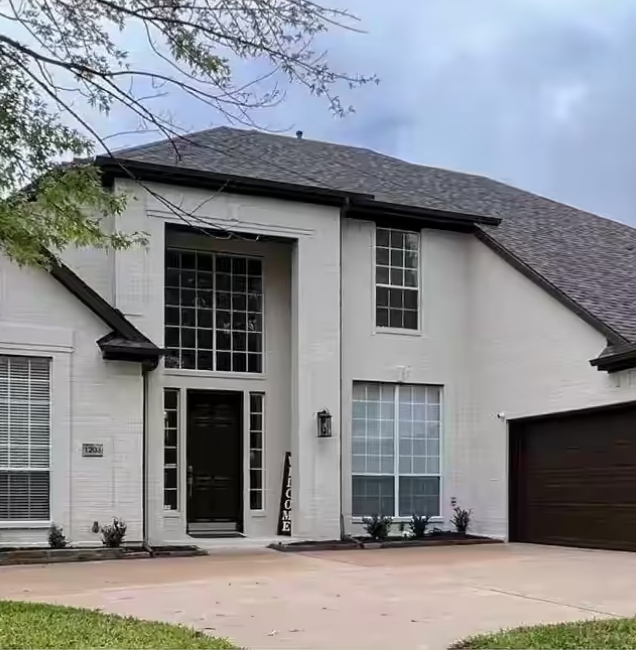
Maybe the May 2026 wind left shingles in your yard, or your 2000s house is still wearing its first roof. Either way, the first step is a free assessment and a straight answer about whether the roof needs a repair, a replacement or nothing yet.
Call (214) 766-3669 any day between 7 am and 6 pm, or send the form and we will call you back. We will come out, photograph what we find and give you an estimate in writing.
Scheduling and paperwork run from our office at 12800 Westridge Blvd, Suite 162, Frisco, TX 75035, and our Central Texas team handles the Georgetown work.
Reliability. Relationships. Results.
Call (214) 766-3669 today and we will set up your free roof assessment.
Asked by Georgetown homeowners
Yes. A gust like the 74 mph one measured in Georgetown on May 19, 2026 can lift a shingle, break the sealant bond and let it lie flat again, so the roof looks normal from the street. The loose shingle tends to show itself in the next storm, by tearing away or letting water in. Our free assessment checks for broken seals and creases, and the photos give you a record dated close to the storm.
Age is rarely the reason on a newer home. Storms are. More than 16,000 Georgetown homes were built in 2010 or later, and NOAA has filed hail of an inch or larger under the city on 11 separate days since then, including 2.75 inch hail in 2020. A few years on a roof does not protect it from hail that size. Often the answer is a repair, and we will say so when it is.
Yes. We start from your association's architectural guidelines. The estimate names a shingle, color and profile that match the approved list, and we help you put together the request the committee reviews. If the board has questions it wants to put to the roofer, we will attend the HOA meeting with you.
Every time, because one storm often brings both. On April 2, 2017, NOAA logged quarter size hail and gusts estimated at 60 mph in Georgetown on the same day. We look for bruised and cracked shingles from hail, and for lifted, creased or unsealed shingles from wind. Photos of each go into the record for your claim.
You file the claim with your insurer, ideally soon after the storm, and keep the date. We photograph the damage and support the claim with that documentation, and we can check the adjuster's written estimate against what is actually on the roof. Texas law requires you to pay your deductible, and an insurer can hold back depreciation until you show proof that you paid it, so be wary of any roofer who offers to cover it.
Membership is optional and starts after the job. Members get two inspections a year, a written roof health report with photos, minor sealant touch-ups, priority scheduling after severe weather, emergency tarping when needed and preferred pricing on repairs. For a Georgetown roof that sees April hail and strong spring wind, it keeps a running, dated record of condition.
Blog

© Copyrighted 2026 SunTex Roofing and Reconstruction. All Rights Reserved. Powered by Fast Hippo Media