



 (214) 766-3669

Austin’s housing splits three ways for a roofer: owner-occupied houses, rental houses whose owners may live across town or out of state, and apartment and condo buildings run by managers and boards. We work for all three. The roof work is the same, whether it is a repair after a storm or a full new roof; what changes is who needs the photos, who approves the estimate and who lets the crew in.

Fill in the form and we will call you back to set a time, or call (214) 766-3669. We pick up seven days a week, 7 am to 6 pm.

 Who covers Austin for us
SunTex is owned by Leanne Tolbert and is 100% woman-owned and operated. Alex Keller manages our Central Texas and Austin sales, so an Austin estimate runs through him, and he stays on it through the install as well. Beth Keller runs operations and Suade Sherman manages the office, which is in Frisco: we have no Austin office, and we will not pretend otherwise.
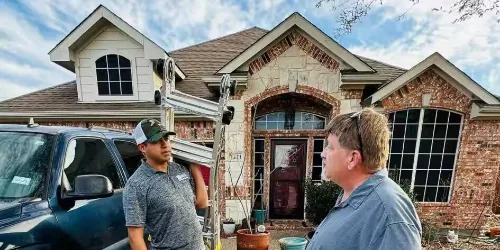
Repairing or replacing the roof on a rental or an investment property adds people to the job: a tenant who needs notice, an owner who may be in another city, sometimes a property manager in between. Our concierge approach puts one project manager in the middle of all of them.

We work out with you how the tenant hears about the job and how the crew gets access. You decide who talks to the tenant, and we plan around the schedule you agreed with them.

You may never stand in the yard and look up. The assessment photos show you the roof’s condition wherever you are, and your project manager keeps you posted on the schedule while the work is under way.

When a storm is behind the damage, our photo documentation supports your insurance restoration claim. The claim itself stays between you, as the policyholder, and your insurer.
Call (214) 766-3669 or use the form. Tell us whether you live in the home, rent it out or manage it for someone else, and what made you call.
We assess the roof at the Austin property, photograph the damage and give you a written estimate for a repair or a new roof. If you are not there, we send you the photos.
Approve the estimate and material, and your project manager books the crew, coordinates access and walks the finished roof with you or your representative.
Austin is a renter’s city, and that changes who calls a roofer. The Census Bureau’s 2020 to 2024 American Community Survey counts 456,113 occupied homes in Austin, and 257,933 of them, about 57%, are rented; owners occupy the other 198,180 (U.S. Census Bureau, ACS table B25003).
The houses are older than the city’s growth suggests. The median Austin home was built in 1994, and about 57% of the 483,071 housing units went up before 2000, including 80,087 in the 1980s and 64,313 in the 1970s. Value sits high on top of that age: the median owner-occupied home is worth $555,300.
Storms that hit Austin can hit its neighbors in the same hour, as September 2023 showed. Our Central Texas team also roofs in Round Rock, where the same September 2023 storm dropped 4-inch hail, up in Pflugerville, where tea cup size hail fell that afternoon, and northwest of the city in Cedar Park.
Austin sits at the southern end of the towns we cover, a run that reaches north through Killeen and Temple to Collin County.
100%
Woman-owned and operated
7 Days
Open 7 am to 6 pm
Free
Roof assessment and estimate
Since 2022
Serving Texas homeowners
Feedback
From residential and commercial roof replacement to urgent emergency roof repairs, our 5-star service speaks for itself.

We used them for Christmas lights and could not have been happier. The entire process was so simple and our lights looked amazing. Very high quality and didn’t have one light bulb out the entire season. Highly recommend using them for your holiday lighting!

Bailey Pullin


Hands down recommend Beth and Alex with Christmas Lights and roofing consultations. Their communication is on point! Excellent service through your whole experience. We have been using them for two years now and will continue! Thanks yall!

Carin Gonzales
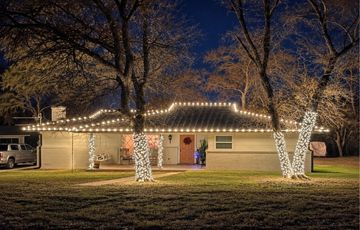
Highly recommend. Merry and Bright by Suntex Roofing made our home merry and bright this holiday season and are now my permanent go-to for my holiday lighting needs.

Chad Mandrell
The other day I had James Rose from SunTex do a courtesy inspection of our roof they replaced a little over a year ago. Mr. Rose was professional and knowledgeable when discussing how the drone inspection reveals no flaws or damage to the roof. I would definitely recommend SunTex to anyone look to have roof work done.

kalonji singleton
Alex Keller with SunTex Roofing exceeded! SunTex gave us a great experience from start to finish. The entire crew protected our new windows, plants, AC units, garden structures and even pool. I HIGHLY recommend this Texas local roofing company.

Sara Odom

Teri Redwine
SunTex provides unmatched customer support and response times. We moved into a new house with the previous owners creating a massive hole upon moving out. SunTex came out immediately and provided a temporary patch to mitigate damage from an incoming storm. Then came back for the official repair a few days later.

Alex Chase
Leanne and her team do GREAT work! Fast and clean as they do your roof replacement process. Leanne and her team are very professional. They get the job done. We are very pleased with our new roof, cutters and the restoration of our fence after the Salado Tornado this past April.

Gary Schmiedekamp
We used them for Christmas lights and could not have been happier. The entire process was so simple and our lights looked amazing. Very high quality and didn’t have one light bulb out the entire season. Highly recommend using them for your holiday lighting!

Bailey Pullin
100% cannot recommend enough!!! So thankful for SunTex. They helped us every step the way. They educated me and worked with me. I would highly recommend them to anyone needing roof replacement or repairs. Their staff is amazing! Cannot thank them enough.

Juan Cruz
If you own a house in north or northeast Austin and nobody has been on the roof since that storm, a free assessment with photos will tell you whether it left damage behind.

SunTex Roofing and Reconstruction opened in 2022 and is 100% woman-owned and operated, with Leanne Tolbert as owner. Our only office is at 12800 Westridge Blvd, Suite 162, Frisco, TX 75035, the address on our Google Business Profile, and Austin is part of the service area our Central Texas and Austin sales manager covers.
We are upfront about that geography because Austin owners deserve to know who they are hiring. Our team is named on our About page, the phone number is the same for every city, and the project manager you meet at the start is the one who sees the job through. We roof houses, commercial buildings and multi-family properties.
Austin does not log hail often under its own name. NOAA’s Storm Events Database lists 14 hail reports filed under Austin from 2010 to mid-2026, and 8 of them came on a single day: September 24, 2023 (NOAA NCEI Storm Events Database).
The other Austin-named days were smaller: quarter-size hail at First Street and Riverside Drive downtown in April 2015, quarter-size hail in May 2020, and half-dollar hail at Speedway and 31st Street in March 2021.
The September day’s record is bigger than the Austin label suggests. Counting reports filed under nearby place names such as Fiskville and North Oaks whose narratives put the hail inside Austin, 27 hail reports that afternoon describe Austin neighborhoods, and 13 of them were 2 inches or larger:
NOAA’s narrative ties the storm to a system that caused $700 million in hail damage in Texas, with Austin, Georgetown and Round Rock the hardest hit, and it lists $300 million of that damage on the Travis County entry.
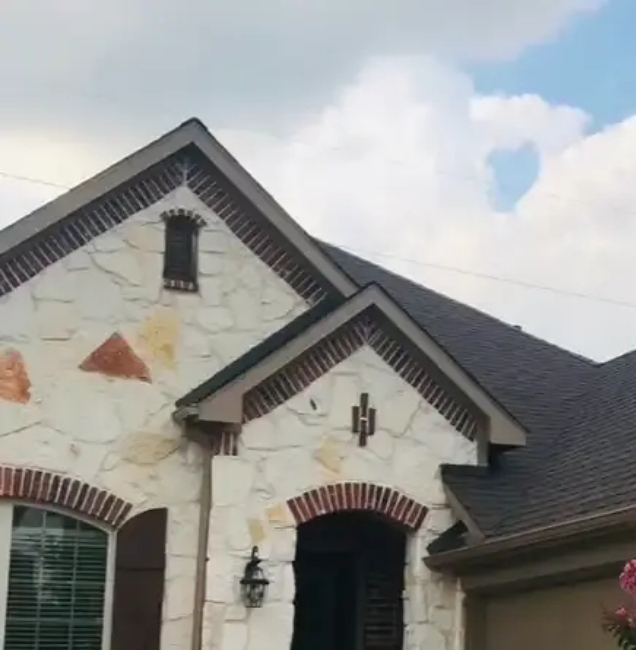
The two groups usually ask for different things. Owner-occupants tend to care how the roof looks from the street, how it handles summer heat, and whether it is ready for solar if they are thinking about panels. Landlords and investors tend to care about a clean scope, a schedule that works around the tenant, and photos that let them approve the job without flying in.
Both want the same thing in the end: a roof that does not need attention again for a long time, and a record that proves when the work was done and what it is made of. We price the job only after we know which of those priorities leads, and after we know whether a repair will do.
There is a third group worth naming: owners who bought an older Austin house to renovate or hold. For them the roof is usually one line in a longer project, and the question is sequencing. Getting the roof done before interior work starts protects new drywall, flooring and insulation from a leak nobody saw coming.
Austin’s roofs mostly come due in two ways. One is slow: age, on a housing stock where the median home dates to 1994. The other is sudden: a single storm that leaves hundreds of millions of dollars of damage in one afternoon, as September 24, 2023 did.
The sudden kind is easy to underestimate in Austin, because those days are spread out. Of the 12 one-inch-or-larger hail reports filed under Austin’s name since 2010, all came on just four days. That gap between big storms makes it easy to assume the roof came through fine, especially on a rental nobody climbs.
Wind does damage too, and it reaches roofs in the city center. In April 2015, NOAA recorded roof damage to parts of a downtown Austin residential mid-rise building. In May 2025, a microburst blew out windows at the top of the Texas Capitol rotunda, with gusts estimated at 65 mph, and in June 2019 estimated 70 mph winds brought down a tree on 15th Street near Red River Street.
The damage that costs the most is the damage found late. On a rental, the first sign may be a tenant’s call about a ceiling stain months after the storm, when the date is harder to tie to a claim. An assessment soon after any hail or high wind makes that much less likely, and it often means a repair instead of a bigger job later.
Three decisions shape Austin roof work more than any others, and all three are easier before materials are ordered.
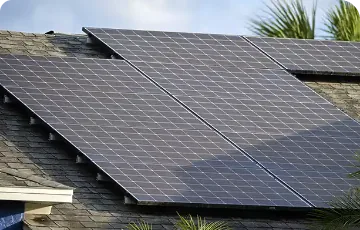
If solar is on your list, say so at the assessment. Austin Energy advises homeowners that a roof should have at least 10 years of life left before solar goes on, and that a damaged roof, or one that may need replacing soon, is best replaced first (Austin Energy solar guidance for homes). Pairing the two jobs means the panels go onto a new roof.
Color affects heat, but not as simply as people think. The Cool Roof Rating Council, which rates roofing products for solar reflectance, notes that lighter colors are generally more reflective, but color is not the only indicator of how a product performs (Cool Roof Rating Council). Ask to see the rating for the products you are choosing between.
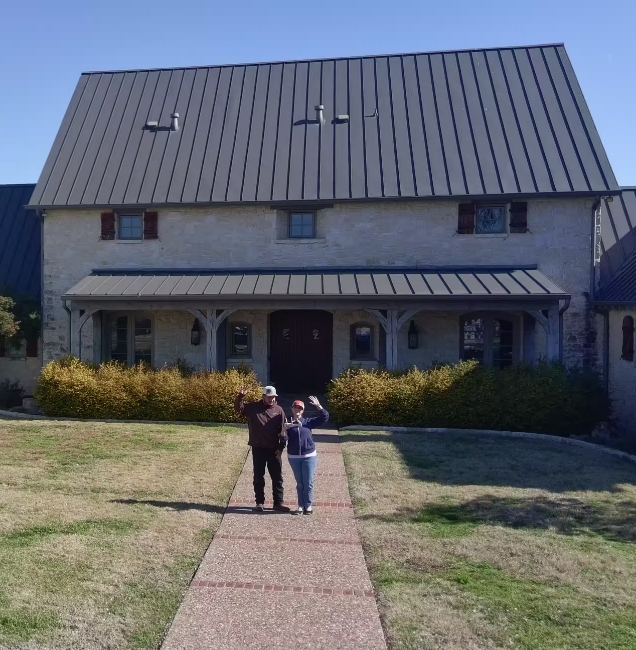
On a rental, think about how long you plan to hold the property and what a buyer or appraiser will see. On a home you live in, curb appeal and comfort weigh more. Asphalt shingle is the usual choice on a rental where budget leads. Designer shingles add depth and shadow lines on larger homes, tile suits Spanish and Mediterranean styles, and standing seam metal fits modern designs. We talk through each at the assessment.
A rental roof has two jobs: keep the building dry and keep the tenant’s home livable. When you own the house but live elsewhere, the practical problems are information and access. You cannot see the roof yourself, and you need the tenant’s cooperation for the assessment and the work.
Our answer is to make the photos do the seeing. You get images of the damage, a written estimate and a recommendation on repair or replacement, and you approve the scope from wherever you are. Your project manager then coordinates the visit and crew day around whatever arrangement you have with your tenant. If the roof can wait a few months, the gap between one lease and the next is the easiest window of all: nobody’s routine is disturbed, and the crew has the driveway to itself.
On a rental, the first warning usually comes secondhand. When a tenant tells you about a stain or a drip, a few details make the next step faster: when they first noticed it, which room and which part of the ceiling, whether it gets worse in rain, and a photo or two from their phone. Note the date of the last storm that came through, too.
Then call us. We assess the roof, photograph what is causing the leak and tell you whether it needs a repair or a replacement. Acting on the first report matters, because water that keeps coming in can damage ceilings, insulation and decking, and a delay can make it harder to show your insurer which storm started it.
With more than 178,000 Austin units in buildings of 10 or more, much of the city lives under roofs that a board or manager is responsible for. We roof residential, commercial and multi-family buildings, and on a larger property the process stays the same: photos of the existing condition, a written estimate and one project manager. The same photo-first approach carries over to flat and low-slope roofs over Austin commercial and apartment buildings, where the owner or board approves the scope from our pictures.
Panels and a roof are a long marriage. If panels go onto a roof that needs replacing in a few years, the panels have to come off and go back on for the reroof. That is why Austin Energy’s guidance puts roof condition first.
Austin Energy also lists what a good solar roof looks like: direct sunlight for at least five to six hours a day, little shade from trees or chimneys, and typically 200 to 400 square feet of open roof for panels. Orientation matters as well: the same guidance says panels perform best facing south, with west- and east-facing systems as the alternatives, so the slopes that face south deserve the closest look at the assessment. If your roof meets those tests and is due for replacement, doing both in the same project saves the second disruption. We handle solar consultation, design and installation for homes and businesses as well as roofing, so both can be planned in one conversation.
Austin-named reports are too few to show a season, so the county record tells the story. Since 2010, NOAA lists 169 reports of hail one inch or larger in Travis County, spread over 41 storm days. April leads with 52, then May with 45, then September with 32, every one of which fell on that single afternoon in 2023, and March with 31.
So the season is spring, with the occasional storm outside it doing outsized damage. If you own an Austin roof, the useful habit is simple: after any storm with hail in your part of the city, have someone look before the next rain.
More than 144,000 Austin homes were built in the 1970s and 1980s, and their roofs may be on a second or third round. On those, the answer to repair versus replacement often comes down to what is under the shingles. A roof with sound decking and damage on one slope can be repaired. A roof with soft decking, several layers, or leaks in more than one place is a replacement candidate.
We say which one we see. If the honest answer is a repair, that is what goes in the estimate.
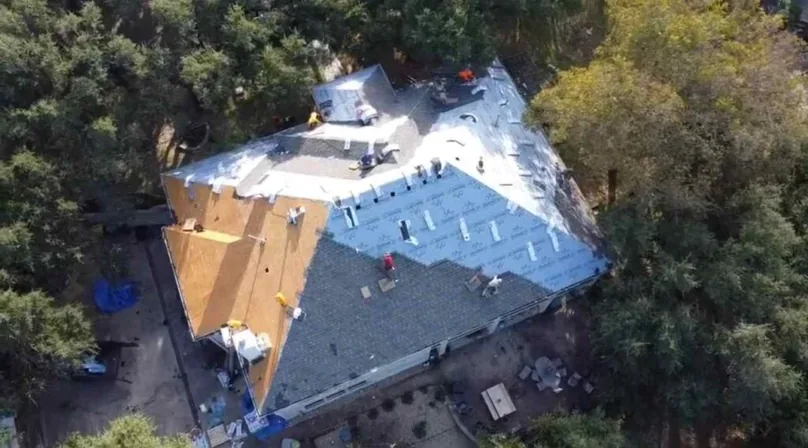
When it is a replacement, the old roofing comes off down to the deck. Once the deck is exposed, any rotted sheathing shows, and it gets replaced. Then come underlayment, flashing at walls, chimneys and valleys, the roofing material, and the ridge and vent components. Your project manager explains the schedule for your building and keeps you posted, which matters even more when you are not there to watch.
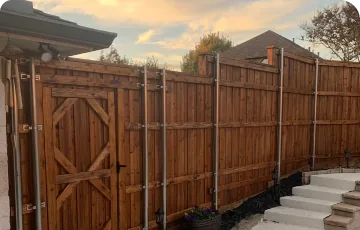
Some owners want more done while we are out. Beyond roofing, we also take on painting, fencing and gutter work, so a rental turnover or a home refresh can run under one company and one project manager.
Here is the process in more detail, so you know what to expect at each stage, whether you live in the house or not.
When you call (214) 766-3669, we ask about the roof, the last storm and any claim. We also ask who lives at the property and who approves the work, because on a rental those can be three different people.
We assess the roof at the Austin address and photograph the damage. You receive the photos, a written estimate and our recommendation, all of which you can share with a co-owner, lender or adjuster.
Your project manager confirms the crew date with you and, if you choose, with your tenant. When the work is done, we walk the roof with you or your representative.
Before: an Austin roof that has been through decades of summers and a storm like September 2023 shows it. Shingle edges curl, granules collect at the downspouts, flashing pulls away at a wall, and on a rental the first anyone hears of it is a tenant’s message about a stain.
After a repair, the source of the leak is fixed and photographed. After a replacement, the old roofing and any bad decking are gone, the underlayment and flashing are new, and the roof surface is the material and color you chose. If you planned for solar, the panels go onto a roof that will not need to come off for a reroof soon after.
The paper trail improves as well. You hold photos of the old damage, the claim file if there was one, and the details of the work. For a rental, that record helps with insurance, with a future sale and with any tenant question about the roof.
For an owner who lives elsewhere, the biggest change is often peace of mind. The roof is no longer the thing you hope does not leak between visits.
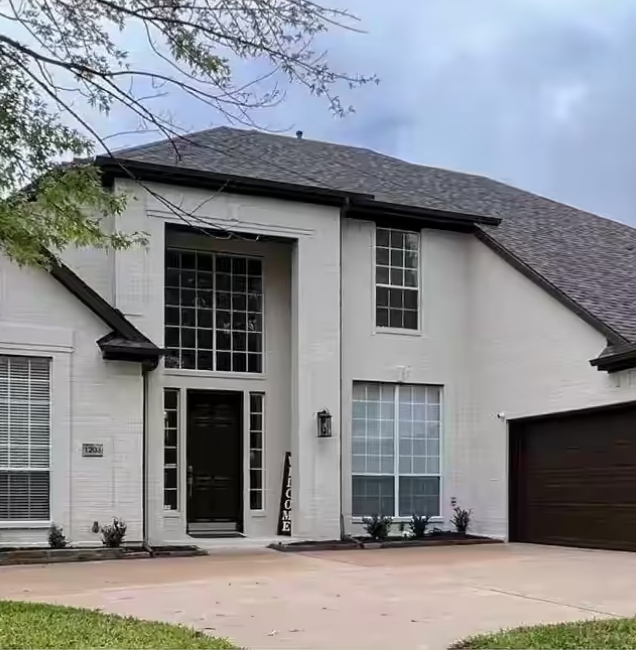
Fresh hail damage, a 1980s roof on its last legs, or a solar project that needs a sound roof first: the first step is a free assessment and a straight answer.
Call (214) 766-3669 any day from 7 am to 6 pm, or send the form and we will call you back. We will arrange access with you, photograph the roof and give you a written estimate.
Our office is at 12800 Westridge Blvd, Suite 162, Frisco, TX 75035, and our Central Texas and Austin team handles the Austin side.
Reliability. Relationships. Results.
Call (214) 766-3669 and we will set up a free assessment at your Austin property.
Questions about our Austin roofing work
Yes. We work for owners who live in the home and owners who rent it out, as well as managers of multi-family and commercial buildings. For an owner who is not on site, we send the assessment photos and written estimate so you can approve the work remotely, and your project manager coordinates access around your arrangement with the tenant.
It may have, especially in north and northeast Austin. NOAA’s records for that afternoon describe hail up to 3 inches on Burnet Lane in Brentwood, 2-inch hail near Kirkwood Road and Wrightwood Road that broke house windows, and large hail around Mueller, Hyde Park and North Lamar. If no one has checked your roof since, a free assessment with photos will show what is there. Damage from that day may not have leaked yet, so a dry ceiling is not proof the roof came through.
All four materials we install (asphalt, designer shingle, tile and standing seam metal) are options for an Austin roof. The bigger heat question is how much sun the surface reflects. The Cool Roof Rating Council notes that lighter colors are usually more reflective but that color alone does not tell you, so compare rated reflectance, not just color chips.
If the roof is damaged or close to the end of its life, yes. Austin Energy advises at least 10 years of remaining roof life before solar goes on and recommends replacing a roof that may need it soon before the panels are installed. Otherwise the panels have to come off and go back on for the reroof. If the roof is sound, it may only need a repair or nothing at all before installation.
You stay the policyholder, so you or someone you authorize deals with the insurer. Distance does not change that, but it does make documentation more important, since you cannot point at the damage yourself. What we provide is the documentation: dated photos of the damage and a written estimate you can send in. Report the damage promptly, keep the storm date, and ask for the adjuster’s estimate in writing so we can compare it with what is on the roof.
We work across Austin and in nearby Round Rock, Pflugerville, Cedar Park, Georgetown and Liberty Hill, all of which are on our service list. Further north, our Central Texas team also covers Killeen, Harker Heights, Belton, Temple and Waco.
Blog

© Copyrighted 2026 SunTex Roofing and Reconstruction. All Rights Reserved. Powered by Fast Hippo Media