



 (214) 766-3669

Two Austin houses on the same kind of street can need very different paperwork for the same new roof. One is a permit-exempt shingle swap; the other sits within reach of a greenbelt and falls under the Wildland-Urban Interface Code. We sort out which one you have before anything is ordered.

Send the form with the property address and whether you live there or rent it out. We will call you to set a time, or phone (214) 766-3669 any day from 7 am to 6 pm.
An Austin replacement estimate has to settle three questions that a roofer in most other Texas cities never asks. We put the answers in writing before you sign.

Outside the wildfire zones, a like-for-like shingle reroof in Austin needs no building permit. Inside them, replacing half the roof or more does. The estimate states which case applies to your lot and why.

Austin’s wildfire code asks for a Class A roof assembly, which means the covering, the deck and the underlayment tested together, not a Class A label on the shingle wrapper alone. We confirm with the manufacturer that the full stack on your roof carries the rating, the same way we specify every job in home reroofs from DFW to the Austin metro.

If hail or wind is behind the replacement, we photograph the damage and explain how your coverage handles a roof of its age. The Texas Department of Insurance notes that with replacement cost coverage, the first payment is the estimated repair cost minus depreciation, and the second follows once repairs are done. The settlement stays between you and your insurer.
Austin publishes an interactive map that shows whether a property sits in Zone A, B or C of the wildfire code. We go over it with you at the assessment, and for Zone A or B the city asks for a distance check on site.
With the zone known, you pick the covering, the color and the impact rating. If panels are in the plan, we size the roof work around them.
If the job needs a permit, it is filed before the crew is booked. Your project manager then orders material, sets the date and tells you and anyone living there when to expect the trucks.
Austin is a city where many roofs belong to owners who live elsewhere, which is the starting point for roof work for Austin owner-occupants, landlords and investors run by our Central Texas and Austin team.
Not every tired roof has to come off. A cracked boot or a strip of failed flashing is a smaller job, and Austin leak and flashing repair, decking included covers the city’s 128 square foot decking rule that decides when a repair needs a permit.
Hail is often what turns a repair into a replacement. The September 2023 storm is the best-known example, and Austin hail repair after the 2023 and 2024 storms sets out that record alongside the claim rules.
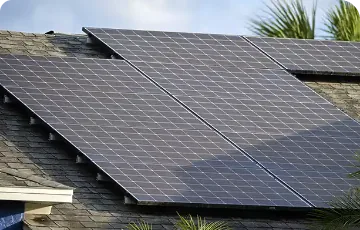
If solar is on your list, a reroof is the moment to plan it, and solar panels designed and installed on Austin homes can be scheduled in the same conversation.
 Feedback
From residential and commercial roof replacement to urgent emergency roof repairs, our 5-star service speaks for itself.

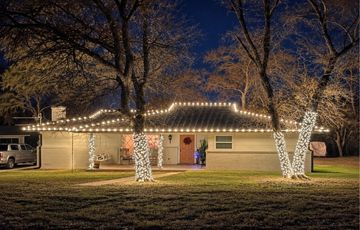
We used them for Christmas lights and could not have been happier. The entire process was so simple and our lights looked amazing. Very high quality and didn’t have one light bulb out the entire season. Highly recommend using them for your holiday lighting!

Bailey Pullin


Hands down recommend Beth and Alex with Christmas Lights and roofing consultations. Their communication is on point! Excellent service through your whole experience. We have been using them for two years now and will continue! Thanks yall!

Carin Gonzales
Highly recommend. Merry and Bright by Suntex Roofing made our home merry and bright this holiday season and are now my permanent go-to for my holiday lighting needs.

Chad Mandrell
The other day I had James Rose from SunTex do a courtesy inspection of our roof they replaced a little over a year ago. Mr. Rose was professional and knowledgeable when discussing how the drone inspection reveals no flaws or damage to the roof. I would definitely recommend SunTex to anyone look to have roof work done.

kalonji singleton
Alex Keller with SunTex Roofing exceeded! SunTex gave us a great experience from start to finish. The entire crew protected our new windows, plants, AC units, garden structures and even pool. I HIGHLY recommend this Texas local roofing company.

Sara Odom

Teri Redwine
SunTex provides unmatched customer support and response times. We moved into a new house with the previous owners creating a massive hole upon moving out. SunTex came out immediately and provided a temporary patch to mitigate damage from an incoming storm. Then came back for the official repair a few days later.

Alex Chase
Leanne and her team do GREAT work! Fast and clean as they do your roof replacement process. Leanne and her team are very professional. They get the job done. We are very pleased with our new roof, cutters and the restoration of our fence after the Salado Tornado this past April.

Gary Schmiedekamp
We used them for Christmas lights and could not have been happier. The entire process was so simple and our lights looked amazing. Very high quality and didn’t have one light bulb out the entire season. Highly recommend using them for your holiday lighting!

Bailey Pullin
100% cannot recommend enough!!! So thankful for SunTex. They helped us every step the way. They educated me and worked with me. I would highly recommend them to anyone needing roof replacement or repairs. Their staff is amazing! Cannot thank them enough.

Juan Cruz
You do not need to stand in the yard to approve a new roof. A free assessment gives you photos of every slope, the zone and permit answer, and a written scope you can review from anywhere.
The City of Austin’s list of work exempt from building permits covers two kinds of residential reroof: asphalt shingles that replace existing asphalt shingles, and the replacement of any roof covering that does not adversely affect the roof structure (City of Austin, work exempt from building permits). Both carry the same exception: they are not exempt if the property is in the Wildland-Urban Interface area and 50 percent or more of the roofing is being replaced.
The same page reminds owners that exempt work must still comply with the building codes and every other city ordinance. Exempt means no permit, not no rules, so the drip edge, underlayment and flashing on a permit-free Austin reroof are held to the same standard as one that is inspected.
Austin was the first major city in Texas to adopt the International Wildland-Urban Interface Code, in 2020, and revised it in 2024 (City of Austin, Wildland-Urban Interface Code). The zones are set by distance from wildland: Zone A within 50 feet, Zone B from 50 to 150 feet, and Zone C farther out but within half a mile of 40 acres or 1.5 miles of 750 acres of wildland.
For roofs, the city’s summary of the code is short. Replacing 50 percent or more of a roof requires full replacement, and in all three zones the roof covering must be Class A rated, with valleys flashed in metal over approved underlayment and gutters made of noncombustible material with leaf guards. On a WUI lot, once the work would replace half the roof or more, the rest of the roof has to be replaced as well.
The most common snag is not knowing the zone. A homeowner who assumes the shingle-for-shingle exemption applies can find, partway through, that the lot sits in Zone C and the job needed a permit and a Class A assembly from the start.
The second is treating the shingle’s fire rating as the whole answer. Austin’s guidance spells out the difference: the covering is the material you see, and the assembly is the covering, deck and underlayment tested together for fire resistance. The city tells owners to confirm with the manufacturer that the underlayment, insulation and sheathing are enough for the Class A rating.
The third is the edges. In a WUI zone the code reaches past the shingles to gutters, which must be noncombustible with leaf guards, to vents, which need ember-resistant mesh with openings of an eighth of an inch, and in Zones A and B to soffits, where vents are not allowed. A reroof that ignores those details can fail inspection even with the right shingle on top.
Every Austin replacement comes down to three choices, and the zone shapes all of them.
Architectural asphalt balances cost and durability, designer shingles add depth on larger homes, tile suits Spanish and Mediterranean elevations, and standing seam metal fits modern designs. Each can be built as a Class A assembly with the right underlayment, which is what we confirm for a WUI lot before ordering. If your neighborhood has an HOA, we match its approved specification too.
The city’s guide allows two valley details in the wildfire zones: 26-gauge galvanized metal over a 36-inch-wide mineral-surfaced cap sheet, or woven shingles over a full-length strip of the same metal. Either way, the flashing has to stay visible for the inspector. We tell you which suits your roof and why.
TDI suggests choosing roofing materials less likely to be damaged by wind, hail or fire, and notes your insurer might give you a discount for them (TDI, insurance and your roof). A Class A assembly with an impact-rated covering checks two of those boxes. Ask your agent which ratings and paperwork your company accepts before you choose.
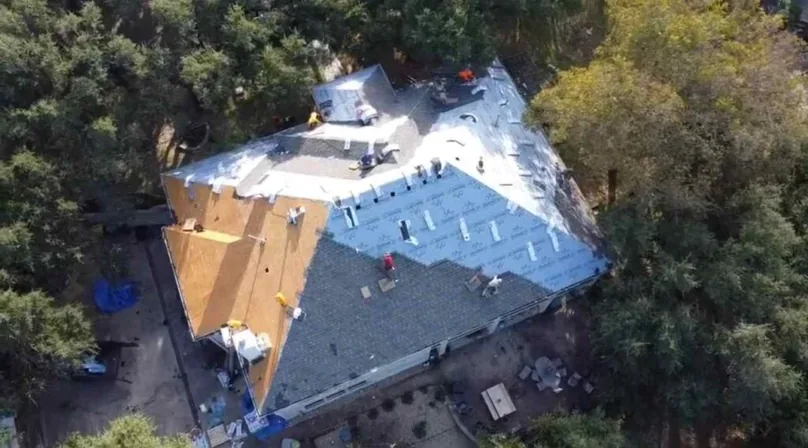
The crew removes the old shingles or tile, the felt or underlayment and the flashing around chimneys, valleys and vents, down to the deck. Boards that are water-damaged, moldy, unsound or spaced wrongly are replaced before anything new goes down, and we photograph each section we change.
Synthetic underlayment covers the deck, with ice and water shield in valleys and other vulnerable spots outside the zones. Inside them, the valley detail follows the city’s guide. Drip edge runs along the eaves and rakes, and new pipe jacks and vent collars go around each penetration.
On a WUI lot, the replacement scope reaches the gutters, vent screens and soffits as well as the field of the roof. We list those items in the estimate so you see them priced, rather than meeting them at inspection.
Austin’s Residential Express Permits cover small projects on single-family and duplex lots, and the city lists a reroof of over 50 percent on a WUI property among them (City of Austin, Express Permits). The city says most Express Permits are issued in one business day, though floodplain and historic district properties can take longer.
The day is long and loud, and on a rental it involves a household that did not hire us. Your project manager runs it in this order.
You get the crew date in writing to share with the tenant, plus a short list: cars clear of the roof edge, pets inside, and fragile items off top-floor walls.
On a permitted WUI job, the valley metal and other details the inspector must see are left open until they are checked. The field shingles, ridge caps and ridge vents go on to the manufacturer’s specifications.
The crew blows off the roof and gutters, sweeps the yard with magnets for stray nails and hauls the old roof away. Your project manager walks the property with you or your representative and sends the before, decking and finished photos for your records.
Whether the roof is simply worn out, hail-damaged or holding up a solar plan, the first step is a free assessment, photos of every slope and a written scope that names the zone, the permit route, the material and the details the code asks for.
Call (214) 766-3669 from 7 am to 6 pm, seven days a week, or send the form and we will call you back. Our office is at 12800 Westridge Blvd, Suite 162, in Frisco, and our Central Texas and Austin team handles Austin jobs.
Reliability. Relationships. Results.
Book a free assessment and get a written scope for your Austin roof.
Austin roof replacement questions
Often not. The City of Austin exempts asphalt shingles that replace existing asphalt shingles, and any roof covering replacement that does not adversely affect the roof structure. The exception is a property in the Wildland-Urban Interface area where 50 percent or more of the roofing is being replaced; that job needs a permit, which the city lists among its Express Permits.
The City of Austin publishes an interactive WUI Code map that shows whether a property is in Zone A, B or C. Zone A is within 50 feet of wildland and Zone B is 50 to 150 feet away, and for those two the city asks owners to confirm the distance by measuring on site. We go over the map with you at the free assessment.
Up to a point. Austin’s summary of its amended code says replacement of 50 percent or more of a roof requires full replacement. Below that line, a partial job is possible, though it still has to meet the code that applies to the work.
Class A is the highest fire rating for a roof assembly or covering, and Austin requires a Class A roof assembly in its wildfire zones. The assembly is the covering, deck and underlayment tested together, so the city tells owners to confirm with the manufacturer that the full stack, not only the shingle, carries the rating.
It can. TDI says insurers inspect the roof when you apply and may charge more or refuse coverage based on what they see, and that some companies switch aging roofs to actual cash value at renewal. A new roof built from materials less likely to be damaged by wind, hail or fire may also qualify for a discount, depending on your insurer.
Blog
© Copyrighted 2026 SunTex Roofing and Reconstruction. All Rights Reserved. Powered by Fast Hippo Media