



 (214) 766-3669

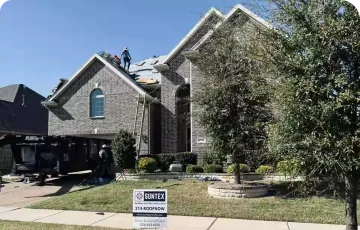
An original roof on an older Plano home is rarely just tired shingles. It may carry a second layer someone added years ago, sheathing that has taken slow leaks, and flashing that has been patched more than once. A replacement priced from the driveway misses all of that, so we price ours from the roof and the attic.

Send the form and we will call you to set up a visit, or phone (214) 766-3669 between 7 am and 6 pm, seven days a week.
An older roof raises questions a newer one does not. We answer these three in writing before a number goes on the estimate.

We check the roof edges and the attic for signs of a second layer, because a roof with two layers almost always has to come down to the deck, and the estimate should say so from the start.

If a storm is part of the story, we photograph the damage and walk you through how replacement cost and actual cash value treat a roof of your roof’s age. The settlement stays between you and your insurer.

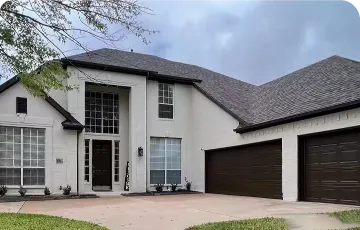
A brick ranch from the 1980s and a two-story from the late 1990s wear roofs differently. We bring samples that suit the house you own and the street around it.
Before you call, find the purchase inspection report or any old insurance claim. Either one may date the roof, and the date shapes everything after it.
We look at each slope and from below at the deck, ventilation and any staining, then photograph what we find. You get a written estimate and an honest read on whether full replacement is warranted.
Once you approve the material and color, your project manager orders it, books the crew and stays your contact until the final walk around the house.
About half of Plano’s homes were built in the 1980s and 1990s, which is why so many original roofs here are reaching the end. Those housing ages shape most of what our Plano roofing team sees on older streets, and a full replacement is only one of the answers.
Plenty of older roofs are not ready to come off yet. If the trouble is one cracked boot or a drip at a chimney, fixing a leak on an older Plano roof is the smaller job, and we will price both so you can compare them side by side.
Sometimes the reason for a new roof is a hailstorm rather than age. Plano took 3-inch hail in April 2023 and damaging wind in May 2024, and Plano hail and wind damage work starts with photos that tie each hit to its storm date.
 Feedback
From residential and commercial roof replacement to urgent emergency roof repairs, our 5-star service speaks for itself.

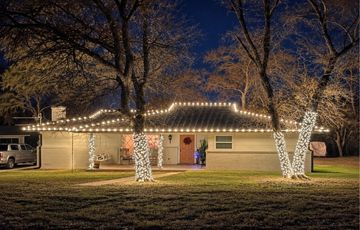
We used them for Christmas lights and could not have been happier. The entire process was so simple and our lights looked amazing. Very high quality and didn’t have one light bulb out the entire season. Highly recommend using them for your holiday lighting!

Bailey Pullin


Hands down recommend Beth and Alex with Christmas Lights and roofing consultations. Their communication is on point! Excellent service through your whole experience. We have been using them for two years now and will continue! Thanks yall!

Carin Gonzales
Highly recommend. Merry and Bright by Suntex Roofing made our home merry and bright this holiday season and are now my permanent go-to for my holiday lighting needs.

Chad Mandrell
The other day I had James Rose from SunTex do a courtesy inspection of our roof they replaced a little over a year ago. Mr. Rose was professional and knowledgeable when discussing how the drone inspection reveals no flaws or damage to the roof. I would definitely recommend SunTex to anyone look to have roof work done.

kalonji singleton
Alex Keller with SunTex Roofing exceeded! SunTex gave us a great experience from start to finish. The entire crew protected our new windows, plants, AC units, garden structures and even pool. I HIGHLY recommend this Texas local roofing company.

Sara Odom

Teri Redwine
SunTex provides unmatched customer support and response times. We moved into a new house with the previous owners creating a massive hole upon moving out. SunTex came out immediately and provided a temporary patch to mitigate damage from an incoming storm. Then came back for the official repair a few days later.

Alex Chase
Leanne and her team do GREAT work! Fast and clean as they do your roof replacement process. Leanne and her team are very professional. They get the job done. We are very pleased with our new roof, cutters and the restoration of our fence after the Salado Tornado this past April.

Gary Schmiedekamp
We used them for Christmas lights and could not have been happier. The entire process was so simple and our lights looked amazing. Very high quality and didn’t have one light bulb out the entire season. Highly recommend using them for your holiday lighting!

Bailey Pullin
100% cannot recommend enough!!! So thankful for SunTex. They helped us every step the way. They educated me and worked with me. I would highly recommend them to anyone needing roof replacement or repairs. Their staff is amazing! Cannot thank them enough.

Juan Cruz
A free assessment tells you whether the original roof has years left or is due now. You get photos of every slope and a written answer either way.

Laying new shingles over old ones is called a recover, and the Asphalt Roofing Manufacturers Association says it is sometimes possible when a single layer lies flat over a sound deck. Its own guidance lists the cases where the old shingles will likely have to go: a roof that already has two layers, a ridge that sags, rotted or warped wood, gaps wider than a quarter inch between deck boards, and shingles too distorted to flatten (ARMA, Asphalt Shingle Reroofing: Replacement vs Recover). ARMA adds that most manufacturers do not recommend putting new shingles over laminated ones, and that a recover may change the impact rating of the new shingles.
On an original Plano roof, those conditions are the ones a few decades of Texas weather tend to produce. We remove every layer on the replacements we price, because a tear-off is the only way to see and fix the deck the new roof will be nailed to.
The Texas Department of Insurance works through a storm claim on a house insured for $200,000 with a 2 percent deductible, which is $4,000, and a $10,000 roof. A replacement cost policy pays $6,000 whatever the roof’s age. An actual cash value policy values a 10-year-old roof at $7,000 and pays $3,000. On a 20-year-old roof, it values the roof at $4,000, the same as the deductible, and pays nothing (TDI, Home policies: Replacement cost or actual cash value?).
Those are TDI’s example figures, not a price for your house. The point holds anyway: on an aging Plano roof, the coverage line on your declarations page can matter more than the damage. TDI’s roof guide adds that some insurers switch older roofs to actual cash value at renewal, so check before a storm, not after.
The first is the extra layer. A second roof laid over the first adds weight and hides the deck, and from the ground it can look like a single roof in fair shape. Only the edges, the attic or the tear-off itself tells you for sure.
The second is decking that has taken water for years. Small leaks that never stained a ceiling can soften boards, and plank decks on older framing can open gaps as the wood dries and moves. Neither shows up until the old covering is stripped.
The third is flashing from earlier repairs. Chimney and wall flashing on an older house may have been patched, sealed over or tied into a later layer, and new shingles laid against old metal carry the old leak forward. We replace it with the roof rather than working around it.
A full reroof is the one point where changing the roof costs no more than keeping it the same. Here is how we talk it through at the assessment.
Most Plano houses of this age wear asphalt shingles, and a modern architectural shingle in a similar color keeps the house looking like itself. It is the straightforward choice when the elevation and the neighborhood suit it.
A heavier designer shingle gives a larger home more depth from the street. Tile and standing seam metal change the profile and the weight on the frame, so we look at the structure before recommending either for a house built for lighter roofing.
New shingles can make fascia and soffits from the 1980s look tired overnight. We also take on exterior painting for the trim around a new Plano roof, so the outside of the house can be finished by one company.
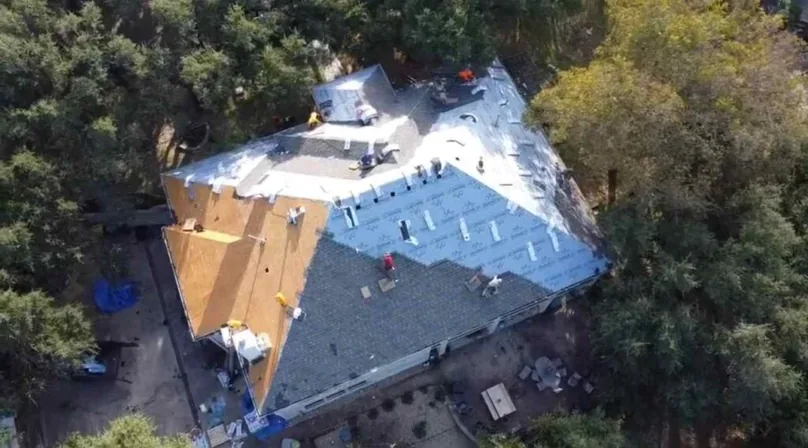
The crew strips the shingles, any second layer beneath them, the old felt, and the flashing at chimneys, valleys and vent pipes. Covering old layers can void a new roof’s warranty and mask deeper problems, which is why nothing old stays on.
With the deck bare, we replace any boards that are water-damaged, moldy, structurally unsound or spaced wrongly for current standards. ARMA treats gaps of more than a quarter inch between deck boards as a reason for removal, and notes that plank decks can be covered with code-compliant sheathing before new shingles go on. Every board we change is photographed, so you see what was found and why it was priced.
Drip edge goes along the eaves and rakes, ice and water shield into the valleys, and new pipe jacks, chimney flashing and ridge vents around every opening. On an older house, these are often the parts that leaked first, so they get new metal and new collars, never a patch.
ARMA’s reroofing guidance calls for checking that attic ventilation is adequate during the same job. Heat trapped in a poorly vented attic ages the deck and shingles from below, and a tear-off is the easiest moment to add ridge vents or correct intake.
Replacement day is loud, but it follows a set order that your project manager runs from start to finish.
Before the first shingle comes off, the crew lays tarps over beds and along the walls so debris from two old layers lands where it can be gathered.
When the deck is bare, any rotten or gapped boards are photographed and shown to you before new underlayment goes down, so the decking line on your estimate matches the wood we actually replaced.
The crew blows off the roof and gutters, sweeps the yard with magnets for nails and hauls away the old roofing. Your project manager then walks the property with you and hands over the photos of the old roof, the deck and the new one.
Whether the roof is the original or you simply do not know, a free assessment answers it. We photograph every slope, check the attic with your permission, and write down whether you need a full replacement now, a repair for the moment, or nothing yet.
Call (214) 766-3669 any day from 7 am to 6 pm, or send the form and we will call you back. Our office is at 12800 Westridge Blvd, Suite 162, in Frisco, a short drive north of Plano.
Reliability. Relationships. Results.
Book the assessment and get a written replacement scope.
Replacing an older Plano roof
We stop, photograph it and show you before anything covers it. Boards that are water-damaged, moldy, unsound or spaced wrongly are cut out and replaced before the new underlayment goes down. Your estimate should already say how replacement boards are priced, so a soft spot found on tear-off day is a line you agreed to in advance rather than a surprise.
It means the insurer subtracts depreciation for age and wear before it pays, and then takes off your deductible. In TDI’s worked example, a 20-year-old roof valued at $4,000 against a $4,000 deductible pays nothing at all. A roof put on in the 1990s is older than that example, so read your declarations page and talk to your agent before you count on a claim.
The industry’s own answer is usually no. ARMA says most manufacturers do not recommend installing new shingles over laminated ones, and that installing over existing shingles can affect the impact rating of the new product. A roof that already has two layers is also on ARMA’s list for removal. We take every layer off on the replacements we price.
They can be, if hail is a concern for you and your insurer recognizes them. TDI says insurers might give a discount for roofing that is less likely to be damaged by wind, hail or fire, and each company sets its own rules. Impact-rated shingles also need a full tear-off to perform as rated, which an original roof is due for anyway.
It can. The frame of a house built for asphalt shingles has to be checked before a heavier roof such as tile goes on, and ARMA’s reroofing guidance includes making sure the structure can carry the load and that attic ventilation is adequate. We look at both during the free assessment and tell you which materials suit the house as built.
Blog

© Copyrighted 2026 SunTex Roofing and Reconstruction. All Rights Reserved. Powered by Fast Hippo Media