



 (214) 766-3669

Some McKinney owners are replacing a roof on a house that has stood for generations. Others are replacing the first roof on a house finished in the last fifteen years. The tear-off is the same job; the paperwork and the material choice are not.

Send your address with the form and we will call to book a free assessment, or phone (214) 766-3669 any day from 7 am to 6 pm.
A replacement goes smoothly when the approvals are in hand before the material is ordered. We answer these questions in the estimate.

If it does, and the new roof will change the look or material visible from the street, the city’s approval comes first. We tell you which case your project falls into.

McKinney lists roofing among the home repairs that require a permit, so every replacement we quote includes the permit step in its schedule.

If hail or wind is behind the replacement, we photograph the damage and explain how replacement cost and actual cash value coverage treat a roof of your roof’s age. The settlement stays between you and your insurer.
The year tells us whether to expect an original builder roof or an older roof with a history, and the address tells us whether overlay or HOA rules apply.
We assess every slope, photograph what we find, and give you a written estimate that names the material, the color and each approval the project needs.
Once the permit and any overlay or HOA sign-off are in place, your project manager orders the material and books the crew.
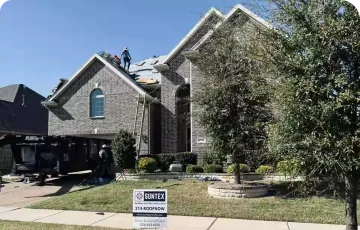
McKinney still has more than a thousand homes built before 1940 alongside thousands finished since 2020, a spread that runs through the roofing we handle across McKinney’s old and new neighborhoods.
A worn roof does not always need to come off. When the trouble is a dented vent cap or a row of lifted tabs after a gusty spring, repairs to hail-dented and wind-lifted McKinney roofs may be all it takes, and we price that option next to a replacement.
Hail and high wind often arrive in the same McKinney storm season, and many replacements here start as a claim. The dated reports and the claim steps are part of our McKinney hail and high-wind storm repairs.
 Feedback
From residential and commercial roof replacement to urgent emergency roof repairs, our 5-star service speaks for itself.

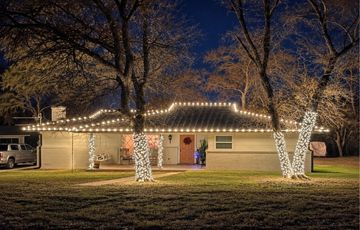
We used them for Christmas lights and could not have been happier. The entire process was so simple and our lights looked amazing. Very high quality and didn’t have one light bulb out the entire season. Highly recommend using them for your holiday lighting!

Bailey Pullin


Hands down recommend Beth and Alex with Christmas Lights and roofing consultations. Their communication is on point! Excellent service through your whole experience. We have been using them for two years now and will continue! Thanks yall!

Carin Gonzales
Highly recommend. Merry and Bright by Suntex Roofing made our home merry and bright this holiday season and are now my permanent go-to for my holiday lighting needs.

Chad Mandrell
The other day I had James Rose from SunTex do a courtesy inspection of our roof they replaced a little over a year ago. Mr. Rose was professional and knowledgeable when discussing how the drone inspection reveals no flaws or damage to the roof. I would definitely recommend SunTex to anyone look to have roof work done.

kalonji singleton
Alex Keller with SunTex Roofing exceeded! SunTex gave us a great experience from start to finish. The entire crew protected our new windows, plants, AC units, garden structures and even pool. I HIGHLY recommend this Texas local roofing company.

Sara Odom

Teri Redwine
SunTex provides unmatched customer support and response times. We moved into a new house with the previous owners creating a massive hole upon moving out. SunTex came out immediately and provided a temporary patch to mitigate damage from an incoming storm. Then came back for the official repair a few days later.

Alex Chase
Leanne and her team do GREAT work! Fast and clean as they do your roof replacement process. Leanne and her team are very professional. They get the job done. We are very pleased with our new roof, cutters and the restoration of our fence after the Salado Tornado this past April.

Gary Schmiedekamp
We used them for Christmas lights and could not have been happier. The entire process was so simple and our lights looked amazing. Very high quality and didn’t have one light bulb out the entire season. Highly recommend using them for your holiday lighting!

Bailey Pullin
100% cannot recommend enough!!! So thankful for SunTex. They helped us every step the way. They educated me and worked with me. I would highly recommend them to anyone needing roof replacement or repairs. Their staff is amazing! Cannot thank them enough.

Juan Cruz
On an older house the answer tells you what may be hiding underneath, and on a newer one it tells you what the builder chose. A free assessment answers it with photos.

McKinney’s Unified Development Code requires a Certificate of Appropriateness before any work or permit for alterations to exterior features of a building in the Historic Overlay district that can be seen from a public right-of-way, and it names the material and basic texture of exterior building materials among those features (City of McKinney Unified Development Code, Chapter 150). Routine maintenance, including in-kind replacement that does not change the design, material or outward appearance, is exempt.
For homes in the overlay’s residential area, the code says the Historic Preservation Officer approves the application or sends it to the advisory board within 30 days of a complete submittal. The application asks for photographs of the property and its neighbors, a letter describing the work, and elevations or renderings, with material samples if the officer requests them. We take the photographs and can help you put the roofing details together, so the material you submit is the material we install.
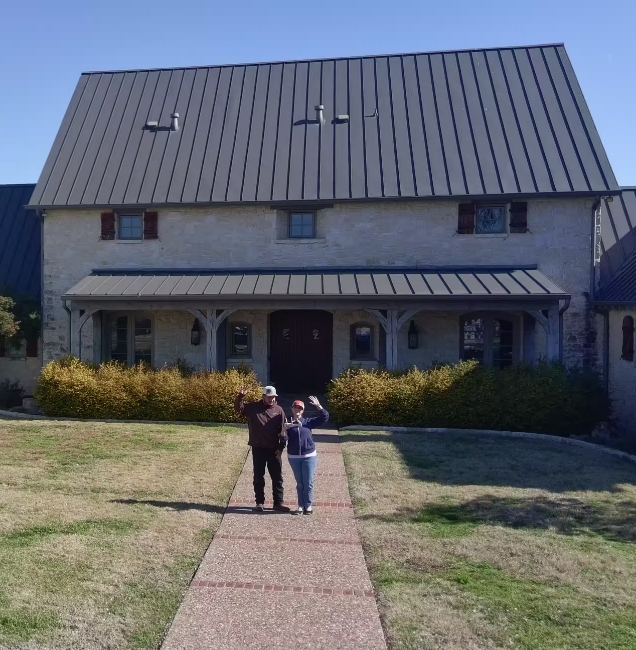
The National Park Service’s guidance on roofing for historic buildings, Preservation Brief 4, says that when a historic roof is readily visible, a substitute material should match the scale, texture and color of the original as closely as possible (NPS, Preservation Brief 4: Roofing for Historic Buildings). It names asphalt shingles among the common stand-ins for wood shingle, slate and tile.
Two more points from the brief matter on older McKinney houses. Failure of the flashing system is usually a major cause of roof deterioration, so flashing deserves top-quality material on a new roof. And an older roof is sometimes found underneath the current one, which is one reason a tear-off on an old house needs time and a careful crew.
Ordering before approval is the most expensive one. A roof that changes the visible material of a house in the Historic Overlay without a certificate, or a color the HOA never approved in a newer subdivision, can mean redoing finished work. Approvals come first on every job we schedule.
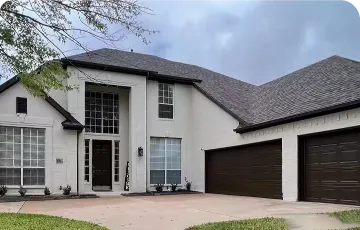
The second is replacing a newer roof like for like without a second thought. A first roof on a 2010s house was the builder’s choice. When it comes off, you can move to a heavier designer shingle or an impact-rated product, and that decision is cheaper made now than after the next hailstorm.
The third shows up only on older houses. A second layer, patched decking or the remains of an earlier roof can sit under the shingles, and none of it shows from the yard. We plan the tear-off expecting surprises and photograph whatever we find before the deck is covered again.
The age of the house narrows the field before color does. Here is how we approach each case at the assessment.
On a house with historic character, the goal is a roof that reads the way the original did from the street. Designer shingles can give a heavier, textured profile, and standing seam metal suits some older porches and outbuildings. We bring samples and match the existing look when the overlay or your own taste calls for it.
Most master-planned streets have an architectural committee with an approved list of products and colors. We match the estimate to that list before you sign and can attend the board meeting with you if questions come up.
We install impact-resistant roofing products. TDI notes that insurers might give a discount for materials less likely to be damaged by wind, hail or fire, and that each company sets its own rules, so ask your agent which ratings count before you choose.
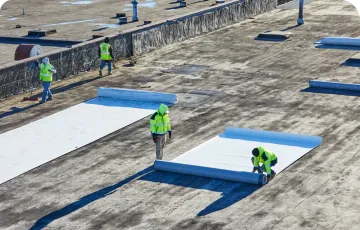
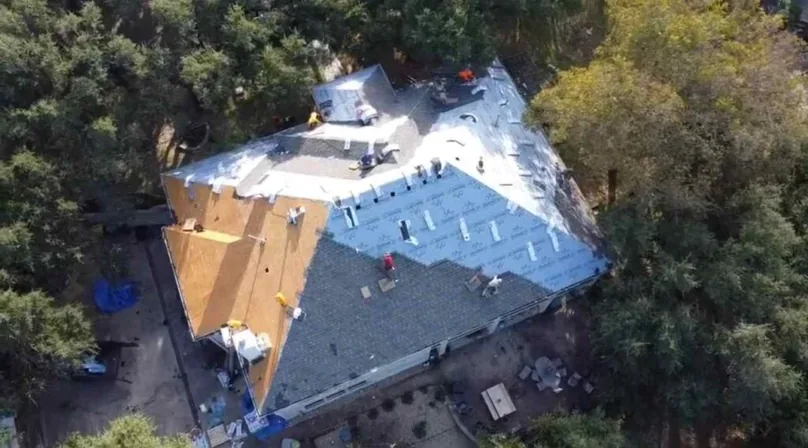
The crew removes every layer: shingles or tiles, the old felt or underlayment, and the flashing at chimneys, valleys and vent pipes. Covering old layers can void a new roof’s warranty and mask deeper problems, so nothing old stays on.
With the deck bare, any boards that are water-damaged, moldy, unsound or spaced wrongly for current standards are replaced and photographed. Synthetic underlayment then covers the deck as the moisture barrier.
Drip edge runs along the eaves and rakes, ice and water shield goes into the valleys, and new pipe jacks, chimney flashing and vent collars go around every opening. Because a tear-off is the one time the ridge and deck are open, we check the ventilation then, and any correction goes in only after you have agreed to it.
Starter shingles reinforce the edges, the main courses go on in staggered rows, and ridge caps close the top, each to the manufacturer’s specifications. Your file ends with photos of the old roof, any replaced decking and the finished work.
Here is how the work runs once the crew arrives.
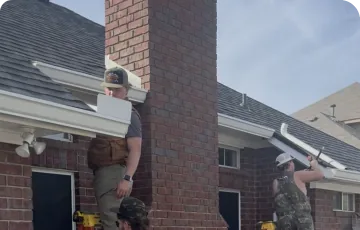
Tarps go over beds and along the walls before the tear-off starts, and debris is gathered as the crew works across the roof rather than left for the end.
When the new roof is on, the crew blows off the roof and gutters, sweeps the lawn and driveway with magnets for nails, and hauls away the old material.
Your project manager walks the property with you, checks that nothing was missed, and hands over the photo record of the job.
Whether the house went up a century ago or a decade ago, the first step is the same: a free assessment, photos of every slope, and a written scope that names the material, the permit and any approval your street requires.
Call (214) 766-3669 from 7 am to 6 pm, seven days a week, or send the form and we will call you back. Our office is at 12800 Westridge Blvd, Suite 162, in Frisco, southwest of McKinney.
Reliability. Relationships. Results.
Book your free assessment and get a written replacement scope.
Replacing a McKinney roof
Yes. The City of McKinney lists roofing under home repairs that require a permit, and applications go through the city’s Citizen Self Service portal, where the permit type is listed as Residential Reroof (City of McKinney, Home Repairs Permit Information). We confirm the permit step for your project before scheduling the crew.
It depends on what changes. The city’s development code requires a Certificate of Appropriateness before work that alters exterior features visible from the street, including the material and texture, while in-kind replacement that keeps the same design, material and appearance counts as routine maintenance. Changing from one roofing material to another, or to a noticeably different look, means applying first.
Not automatically. The original roof was the builder’s pick. A replacement is the easiest time to move to a designer shingle or an impact-rated product, as long as your HOA’s approved list allows it. Texas Property Code Section 202.011 also limits an association’s power to ban impact-resistant shingles that resemble and match the neighborhood’s.
That depends on your coverage. TDI explains that replacement cost coverage pays to replace the roof at current prices, while actual cash value coverage pays less for an older or worn roof because it deducts depreciation. Some insurers switch aging roofs to actual cash value at renewal, so read your declarations page before you count on the payment.
There could. The National Park Service notes that an older roof is sometimes found underneath the current one on historic buildings, and remnants can survive in awkward places or in the attic. A full tear-off shows what is there. We photograph anything we uncover before the deck is repaired and covered.
Blog

© Copyrighted 2026 SunTex Roofing and Reconstruction. All Rights Reserved. Powered by Fast Hippo Media