



 (214) 766-3669

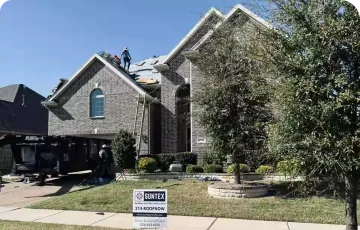
A roof leak usually announces itself indoors: a brown ring on a bathroom ceiling, paint that peels or bubbles, a musty smell in the attic. The spot where the water shows is often not the spot where it got in, because water can run a long way along the deck and rafters before it finds a way down. On Frisco homes we repair the parts of the roof that let it in:

Send the form with what you have seen, and we will call you back to book a free assessment. You can also call (214) 766-3669, any day from 7 am to 6 pm.
A repair is a smaller job than a new roof, but the way it is handled should not shrink with it. Three things come with every Frisco repair we take on.

You hear what failed and why, in plain words, with photos that show it: a split boot on a vent stack, a course of shingles that came unsealed, a gap where step flashing meets a wall. Knowing the cause tells you whether the fix will last.

Most parts of a shingle roof can be fixed on their own without opening up a large area, and shingles can be carefully separated even after they have sealed down. That is what lets a repair stay small.

One dedicated project manager books the crew, answers your calls and shows you the finished repair, so a small job never turns into chasing a stranger for updates.
Set a bucket or a tub under the drip, move furniture and boxes out of the way, and photograph the stain and anything wet. Pictures taken before any work starts are the ones an insurer asks for.
Tell us which room shows the leak, roughly when it started, and whether it only appears in hard, wind-driven rain. Those three details often point to the part of the roof that failed.
We assess the roof at your Frisco home, photograph what we find, and give you a written estimate. If the honest answer is that the roof needs more than a repair, you hear that at the same visit.
Our only office sits on Westridge Blvd inside Frisco, and repair work here covers two quite different kinds of roof. In the older subdivisions, original shingles are getting stiff with age, which changes what a repair can safely touch; on newer streets, hail and wind are usually what break a roof before age does. The housing mix behind that split, and the woman-owned team that answers the phone, belong to the Frisco roofing company we run from inside the city. When a roof has reached the point where patches no longer make sense, the next conversation is a full Frisco roof replacement planned around HOA approval and the insurance claim. When a spring storm is the reason you are calling, Frisco hail and wind damage, documented storm by storm, is where we keep the dated record of what has fallen on this city. For homes outside the city limits, the same diagnosis and photo record come with our roof repair and leak repair service across North and Central Texas.
 Feedback
From residential and commercial roof replacement to urgent emergency roof repairs, our 5-star service speaks for itself.

We used them for Christmas lights and could not have been happier. The entire process was so simple and our lights looked amazing. Very high quality and didn’t have one light bulb out the entire season. Highly recommend using them for your holiday lighting!

Bailey Pullin


Hands down recommend Beth and Alex with Christmas Lights and roofing consultations. Their communication is on point! Excellent service through your whole experience. We have been using them for two years now and will continue! Thanks yall!

Carin Gonzales
Highly recommend. Merry and Bright by Suntex Roofing made our home merry and bright this holiday season and are now my permanent go-to for my holiday lighting needs.

Chad Mandrell
The other day I had James Rose from SunTex do a courtesy inspection of our roof they replaced a little over a year ago. Mr. Rose was professional and knowledgeable when discussing how the drone inspection reveals no flaws or damage to the roof. I would definitely recommend SunTex to anyone look to have roof work done.

kalonji singleton
Alex Keller with SunTex Roofing exceeded! SunTex gave us a great experience from start to finish. The entire crew protected our new windows, plants, AC units, garden structures and even pool. I HIGHLY recommend this Texas local roofing company.

Sara Odom

Teri Redwine
SunTex provides unmatched customer support and response times. We moved into a new house with the previous owners creating a massive hole upon moving out. SunTex came out immediately and provided a temporary patch to mitigate damage from an incoming storm. Then came back for the official repair a few days later.

Alex Chase
Leanne and her team do GREAT work! Fast and clean as they do your roof replacement process. Leanne and her team are very professional. They get the job done. We are very pleased with our new roof, cutters and the restoration of our fence after the Salado Tornado this past April.

Gary Schmiedekamp
We used them for Christmas lights and could not have been happier. The entire process was so simple and our lights looked amazing. Very high quality and didn’t have one light bulb out the entire season. Highly recommend using them for your holiday lighting!

Bailey Pullin
100% cannot recommend enough!!! So thankful for SunTex. They helped us every step the way. They educated me and worked with me. I would highly recommend them to anyone needing roof replacement or repairs. Their staff is amazing! Cannot thank them enough.

Juan Cruz
Put a bucket under it, take a few photos, then call us. A free assessment tells you where the water is getting in and what it will take to stop it.

Homeowners often assume that a leak means the whole roof has to go. The National Roofing Contractors Association answers that question directly: a leaking roof does not necessarily need to be replaced, because leaks can come from flashing that has worked loose or from one damaged section. NRCA puts complete roof failure down to improper installation or a material that was wrong for the building.
That is the standard we hold our own estimates to. If your roof has one failed boot, a few blown-off shingles or one bad run of flashing, the estimate says repair. If the damage runs across whole slopes, we show you the photos that prove it before we suggest anything bigger.
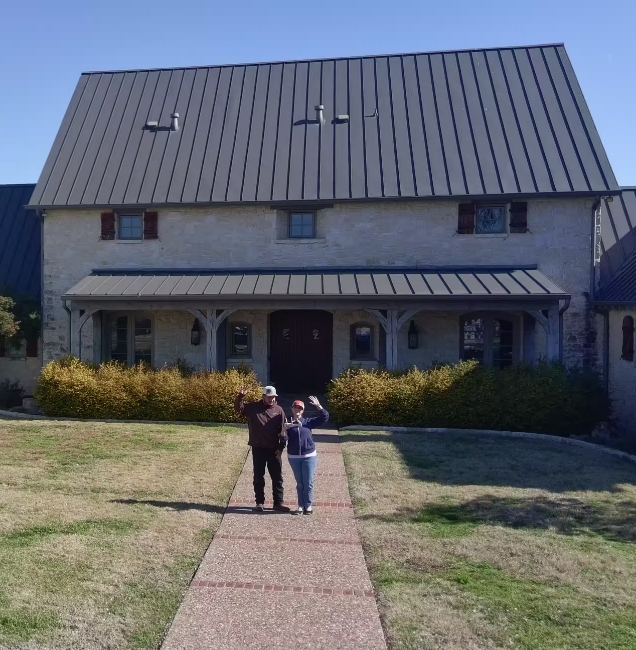
We photograph the damage we find and the repair once it is finished, and the pictures are yours. They show an insurer what the damage looked like, they show a buyer’s inspector what was fixed and when, and they give you something to compare against if a stain ever comes back.
If you want the roof watched after the repair, the SunTex Roof Care Program keeps a roof on a twice-a-year schedule. Those benefits are for members only: two inspections a year, a written roof health report with photos, sealant touch-ups and preferred repair pricing.
Flashing is the thin metal laid into the joints of a roof: around chimneys, along valleys, at skylights and where a slope meets a wall. Over the years it can rust, slide out of position or crack, and each of those opens a path for water. Valleys carry extra risk, because they collect the runoff from two slopes, and gutters packed with leaves or shingle grit can back water up under the bottom courses.
Pipe boots fail in a different way. Most are made of rubber or neoprene, and long Texas summers dry them out until they crack around the vent pipe. The signs are dark stains in the attic near a vent, a water mark on a bathroom ceiling below it, or a split you can see from a ladder.
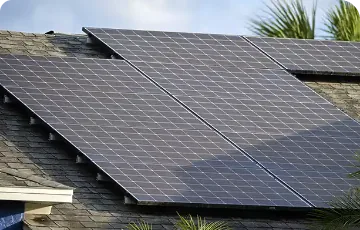
Wind and rooftop equipment cause the rest. A strong gust can lift, tear or strip shingles and leave nail heads exposed, and satellite dishes, solar racking and other mounted equipment can break the seal on the shingles around their fasteners. None of it shows from the driveway until the first stain appears inside.
Even a small repair carries a few decisions, mostly about how it will look and how far the new work should reach.
The best match is a shingle from your own roof’s original order. The Asphalt Roofing Manufacturers Association points out that roofers often leave spare bundles behind when a roof goes on, so check the garage before we order anything. Without them, the shingle’s color name and the year the roof went on help us find the closest product still made. If your Frisco neighborhood has an HOA, we match its approved specifications too.
TAMKO’s notice on replacing asphalt shingles warns that metric and English-size shingles must not be mixed on one roof, that replacements should come from the same manufacturer, and that one brand’s color can vary by plant, production line and run date. Even a good match looks newer at first, and ARMA notes the difference becomes less apparent as the repair weathers.
On a puncture or a single failed boot, the repair stays at that spot. After hail, TAMKO advises against swapping only the shingles that look damaged, because the rest of the slope can show its own problems later, so we look at the whole slope before we set the size of the job.
Chimneys are where rusted step flashing tends to show up, skylights are where seals crack, and valleys are where flashing that was layered wrong lets water in. Warning signs inside are water stains around the skylight or the chimney chase, a musty smell in the attic near those spots, and rust, cracks or separation you can see at their edges. Leaks around a chimney can be tricky to pin down, so this is one joint to have looked at before the stain spreads. A dab of sealant over the surface is not the fix; the failed piece gets replaced.
Every plumbing vent, exhaust and mounting bracket is a hole in the roof that depends on a seal. A cracked boot is one of the simpler leaks to stop if it is caught early, which is why a water mark under a bathroom vent deserves a call rather than a wait. ARMA lists installing proper flashing around roof penetrations among the repairs a qualified roofer can make relatively quickly.
A shingle that wind has lifted may lie back down looking fine, but its seal strip is broken and a crease often runs across it where it bent. ARMA’s February 2026 bulletin names resealing wind-damaged shingles, replacing punctured ones and resetting backed-out fasteners as quick repairs, and describes how a roofer lifts the shingle upslope, fixes the fastener beside the old hole and hand-seals the course again. On an older roof, TAMKO cautions that aged shingles turn brittle, so lifting them without cracking their neighbors takes care.
Four questions decide it. Is the damage confined to one spot or one component? Does the rest of the slope show hail or wind damage once we look closely? Are the shingles still flexible enough to lift without breaking the ones beside them? Can we find a match the eye will accept? Four yes answers mean a repair. When the answers start coming back no, a repair only delays the bigger job, and we tell you so with the photos in hand.
The order matters with a leak: protect the inside, find the cause, then make a repair that is meant to stay.
Inside, buckets and plastic sheeting limit the damage to ceilings and insulation. Outside, a tarp over the damaged area can keep more water out until the repair is made. The Texas Department of Insurance says temporary repairs are generally fine, as long as you photograph the damage first and hold off on permanent repairs until you have talked to your insurance company.
We assess the roof, trace the stain back to where the water is entering, and photograph the failed boot, flashing or shingles. You get a written estimate and our recommendation on the same visit.
Roofing cement can seal a puncture for now, but ARMA is clear that it is a temporary measure, not a long-term repair. The permanent fix replaces the failed part with matching material, and your project manager shows you the finished work with the photos to go with it.
If there is a stain on the ceiling, a boot you can see is cracked from the yard, or shingles in the flower bed after a windy night, it is worth a look before the next heavy rain finds the same opening.
Call (214) 766-3669 any day from 7 am to 6 pm, or send the form and we will call you back. We will come to your Frisco home, photograph what we find and give you a clear written estimate.
Reliability. Relationships. Results.
Call (214) 766-3669 and we will book your free roof assessment in Frisco.
Questions about roof and leak repair in Frisco
Often, yes. Leaks commonly start at one component: a cracked pipe boot, a loose piece of flashing, or a few shingles that wind lifted or tore. Each of those can be repaired on its own. A replacement becomes the better choice when damage runs across whole slopes, when the shingles have grown too brittle to lift without breaking, or when no acceptable match exists. Our free assessment tells you which case you are in, with photos.
Catch the water with a bucket, move belongings away from the drip, and take photos of the ceiling and the roof from the ground. The Texas Department of Insurance says temporary repairs are generally fine, but permanent repairs should wait until you have spoken with your insurer. Stay off the roof itself: walking a wet or damaged roof is dangerous and can add damage of its own.
They can come close, and spare bundles left from the original install give the best match. Without them, the color name and the year the roof went on help narrow it down. Even a well-matched repair looks newer at first, because the new shingles have not weathered yet, and the difference fades over time. If your HOA has approved specifications, we match those as well.
No. The Asphalt Roofing Manufacturers Association treats roofing cement as a temporary measure, and we do not use it as a fix. When water has to be stopped before the repair, we tarp the area or seal it with sealant. A lasting repair replaces the damaged shingle, boot or flashing with matching material, which is what we quote for.
It depends on the cause and your policy. Many policies pay for damage from falling objects such as trees, subject to your deductible. The Texas Department of Insurance notes that most home policies do not cover water damage from gradual leaks or seepage. That is one reason to have a slow leak looked at early, and to keep the photos we take with your records.
Blog

© Copyrighted 2026 SunTex Roofing and Reconstruction. All Rights Reserved. Powered by Fast Hippo Media